
Ten days before handing over the keys to the Oval Office, the 44th President of the United States went back to where it all started. Standing before a roaring crowd in his adopted hometown of Chicago, Barack Obama delivered a farewell address that served as both a nostalgic victory lap and an urgent warning. The speech capped off an eight-year presidency with tears, historic television ratings, and a clear message about the future of the country.
A Hometown Goodbye for the 44th President
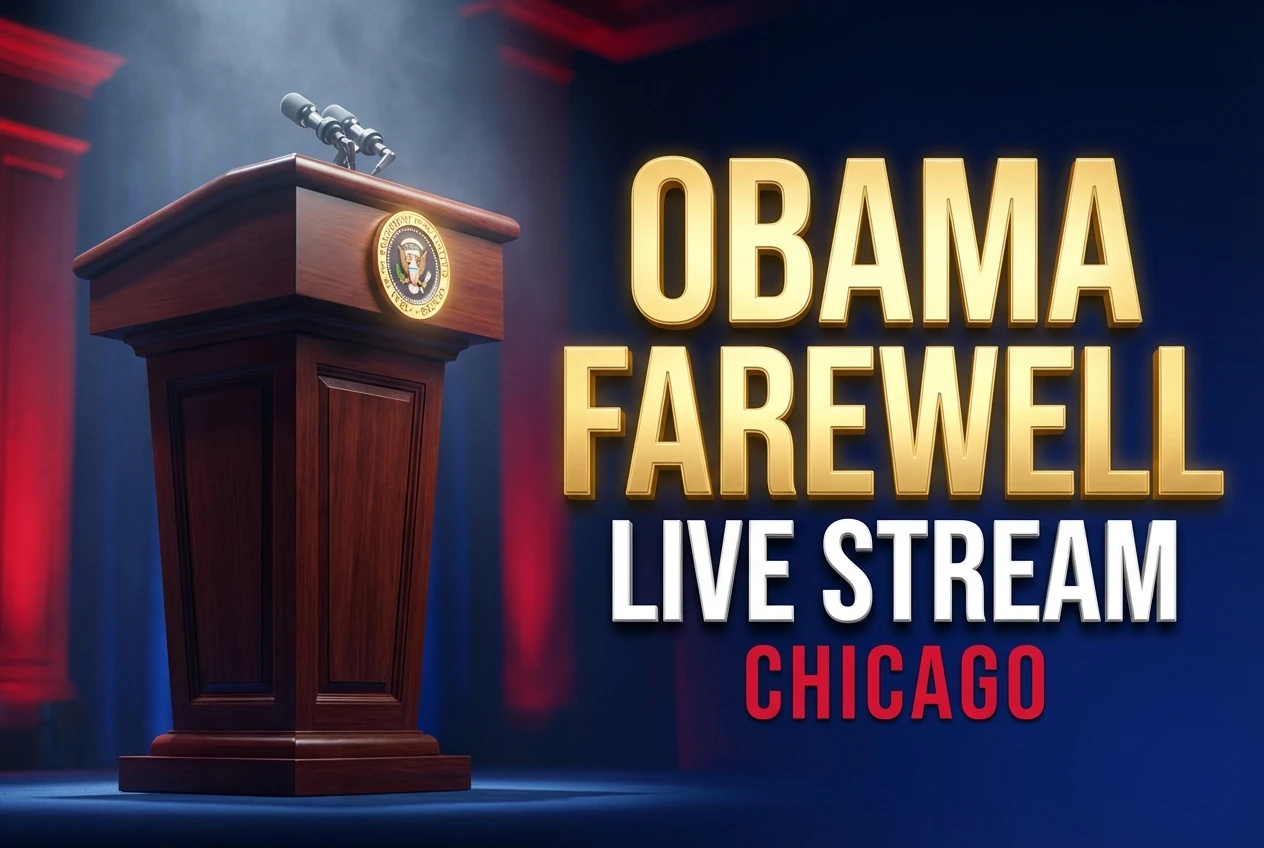
Instead of the Oval Office, Obama chose McCormick Place in Chicago for his final public address. This is the exact same venue where he gave his 2012 reelection victory speech, bringing his political journey full circle. Thousands of people waited in line in freezing temperatures for days just to secure free tickets to the Tuesday night event.
Ultimately, about 18,000 supporters packed the convention center to watch history unfold. The atmosphere felt more like a campaign rally than a traditional presidential goodbye. The president used the energy in the room to remind Americans that he took office when the country faced the real possibility of a second depression. He noted that the nation had weathered the storm together.
He leaves the White House after 75 consecutive months of job growth, marking a significant economic turnaround. His final job approval rating sits at 59 percent, according to recent numbers from Gallup. For context, that is much higher than George W. Bush’s 34 percent approval when he left office, though it rests slightly below Bill Clinton’s 66 percent mark at the end of his term.
The location held deep personal and political significance for the outgoing president for several key reasons:
- Chicago is where his political career gained national momentum.
- It served as the site of his 2008 and 2012 victory speeches.
- The city represents his earliest work as a community organizer.
- It is the adopted hometown of his wife, Michelle Obama.
The 1796 Blueprint for Changing Hands
The tradition of the presidential farewell address was established by George Washington in 1796, and Obama explicitly cited this history early in his remarks. Occurring just ten days before the inauguration of Donald Trump, the speech served as a highly visible public affirmation of the peaceful transfer of power. The country had just emerged from a deeply divisive 2016 election cycle, making the historical precedent even more relevant.
Democracy requires basic solidarity, Obama argued, even when the nation feels bitterly divided. He reminded the crowd that America is not the project of any one person, emphasizing that the single most powerful word in our democracy is the word “we.” He famously told the audience that the founders quarreled and compromised, but they always understood the need for a unified foundation.
The peaceful transition of power is mandated by the U.S. Constitution, and the president made it clear that his administration would ensure a smooth handover. He committed to making the transition as seamless as the one President Bush provided to him eight years prior. You can read the full text of his remarks through the complete transcript of the farewell speech to see exactly how he framed this commitment.
A Look Back at Eight Years of Policy
Before getting to the emotional goodbyes, the president took time to outline what he viewed as the defining victories of his two terms. He reminded the audience of the sheer panic that gripped the economy when he first took the oath of office in 2009. From that starting point of a potential second depression, he pointed to the recovery efforts that stabilized the financial system.
On the international stage, he highlighted the fulfillment of his campaign promises regarding foreign conflict. He noted that he successfully brought the vast majority of America’s troops home from Iraq. Furthermore, he pointed to international diplomacy efforts, specifically calling out the global climate change conference as a major achievement that required American leadership.
These policy reflections were not just a list of accomplishments, but a framework for what he hopes future administrations will protect. He argued that progress is rarely a straight line, and that democracy can often feel messy and frustrating. Still, he maintained that the overall trajectory of the nation remains pointed toward a more equal and just society.
Tears, Tributes, and a Twitter Record
The most memorable moments of the night had nothing to do with policy or politics. The president wept openly while paying tribute to his wife, calling Michelle Obama his best friend and the girl from the South Side. He also thanked Vice President Joe Biden and his daughters, Malia and Sasha, for their sacrifices over the past eight years in the public eye.
The speech resonated far beyond the walls of McCormick Place. According to Nielsen ratings, an estimated 24.5 million live television viewers tuned in to watch the broadcast. Major networks including CBS, NBC, ABC, Fox, and PBS all carried the live feed from Chicago. That large viewership number does not even include the millions who streamed the event online through digital news platforms.
Following the broadcast, the president’s online team posted a simple thank you message to his supporters. Within 24 hours, that post garnered over 500,000 retweets on the @POTUS account, making it the most popular post in the history of that official profile at the time. First Lady Michelle Obama followed up from the @FLOTUS account, posting that she was proud of all they had accomplished together on a remarkable journey.
| Metric | Final Count |
|---|---|
| Live Event Attendance | 18,000 people |
| Live TV Viewership | 24.5 million viewers |
| Final Job Approval (Gallup) | 59 percent |
| @POTUS Tweet Retweets | 500,000+ within 24 hours |
The Final Appeal to American Solidarity
Throughout his political career, Obama built his brand on the concept of hope. In his final hours on the public stage, he leaned hard into that same theme, urging citizens to stay active in their communities. He asked the American people to believe not in his ability to bring about change, but in their own power to shape the future of the country.
Many political analysts noted the educational tone of the broadcast, observing how it functioned as a lesson in civic duty. William Crotty, Professor Emeritus of Political Science at Northeastern University, summarized the historical weight of the address perfectly.
It was a primer on democracy.
For anyone looking to understand the core themes of the night, exploring the hopeful quotes from his closing remarks reveals a deliberate attempt to calm a fractured nation. He closed the night with a direct nod to his famous 2008 campaign slogan. “Yes we can. Yes we did,” he told the cheering crowd before waving his final goodbye.
The core messages he left for the American public included:
- A call to protect democratic institutions from external threats.
- A reminder that national progress is rarely a straight line.
- An emphasis on the basic decency of the American people.
- A warning about the dangers of extreme political polarization.
The peaceful transfer of presidential power remains one of the defining achievements of the American republic. As the moving boxes get packed at the White House and a new administration prepares to take the oath of office, this final speech stands as a historical marker for the end of an era. The tradition of the presidential goodbye continues to matter because it gives leaders a chance to speak not as politicians, but as citizens. Hopefully, the next generation will ensure the principles of our #AmericanDemocracy remain stronger than the last time they were tested in #Chicago.

