
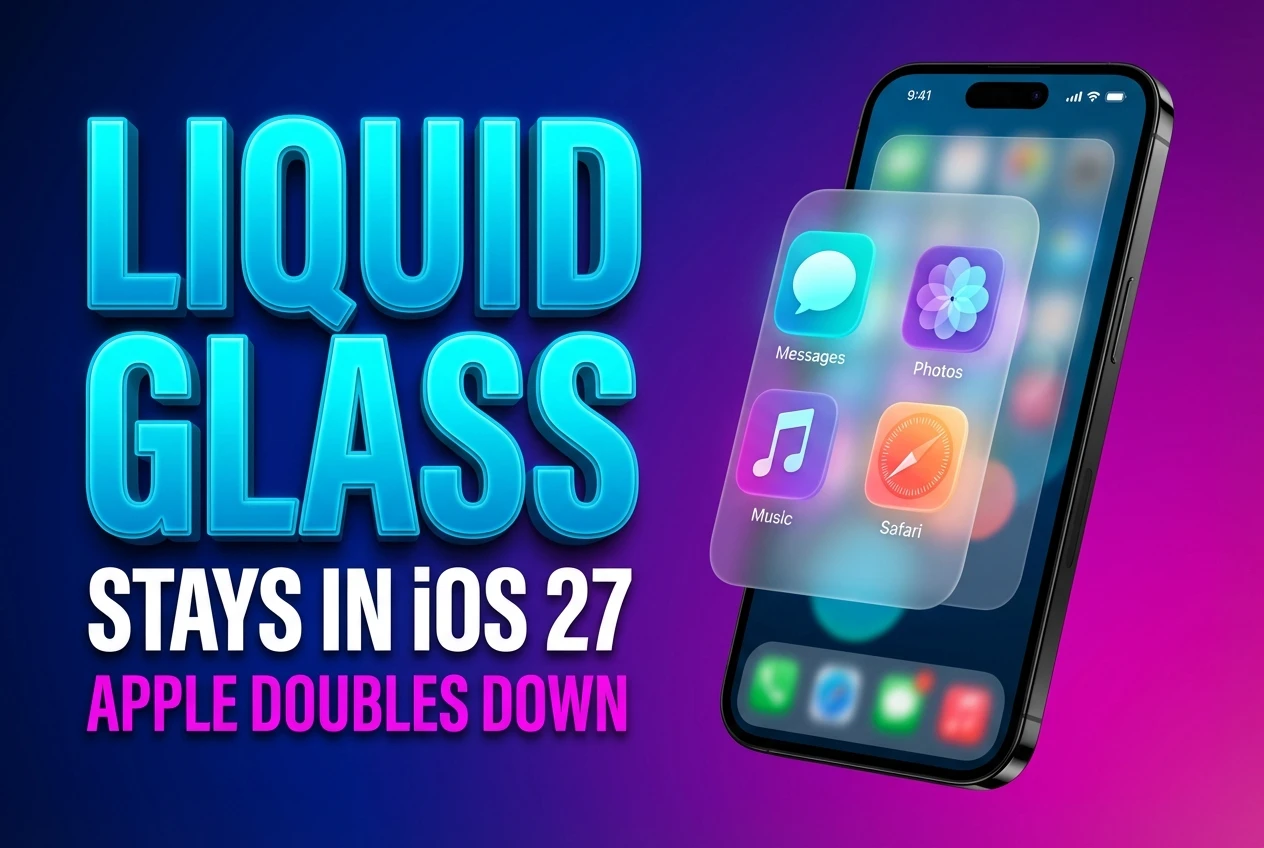
If you hoped your iPhone would drop those heavy translucent menus this autumn, prepare for disappointment. Industry reports confirm Apple plans to keep its controversial Liquid Glass design language in iOS 27. Despite months of loud user complaints about severe battery drain and interface lag, the company is treating this visual overhaul as a permanent foundation. The tech giant appears determined to refine the look rather than abandon it.
The Overwhelming Friction of iOS 26
Older iPads are reportedly dropping below 10 frames per second just trying to resize the Weather app sidebar. That single performance metric captures the frustration millions of users have felt since September 2025. When the system-wide Liquid Glass overhaul arrived across Apple hardware, it introduced a dynamic interface that constantly reflects and refracts background elements.
Alan Dye, the former vice president of Human Interface Design, originally pitched the concept during the official keynote presentation in California. He promised an experience that combines the optical qualities of glass with a unique fluidity that adapts to specific content. For people with the very latest hardware, the shifting colors and depth effects look beautiful.
For everyone else, the software update introduced serious daily friction. The demanding nature of real-time GPU compositing requires processing power that older hardware simply struggles to deliver. Rendering shimmering toolbars directly impacts these devices, causing phones to run hotter and die faster.
“My eyes literally can’t take it. Since the update… I’m considering buying a different phone. Actually feel like it’s wrecking my eyes,” wrote one iPhone user on an official Apple support thread.
Apple attempted a minor course correction by adding transparency sliders in recent point updates. However, the core design remains mandatory for an estimated 1 billion users navigating the ecosystem every day.
The Hidden Cost of Transparent Menus
Beyond just battery life, the interface shift has sparked conversations about basic usability. UX researchers note that transparency and refraction effects create significant cognitive load for everyday users. Instead of clean, solid backgrounds that push text forward, you are forced to look through shifting layers that scatter your focus. One recent design analysis of the controversy highlighted how fragile this user experience becomes in varied lighting conditions.
This frustration arrives at a precarious time for the company. U.S. antitrust regulators have recently pressured Apple to allow official Android migration tools. In the past, the high barrier to leaving the iOS ecosystem meant users just accepted whatever design changes arrived. Now, with easier transfer paths expected, a polarizing interface could actually push frustrated buyers toward competing devices.
Users have flooded social media and support channels with identical frustrations about the new look. The most common issues cited include:
- Severe battery drain during normal daily tasks
- Noticeable lag when switching between heavy apps
- Reduced text readability across the operating system
- Visual clutter from overlapping translucent layers
A smartphone functions as a wallet, a workplace, and a primary camera. When the basic menus feel slow or difficult to read, your trust in the entire device starts to degrade.
Why Cupertino Refuses to Revert the Interface
A sudden executive departure usually signals a change in strategy. When Alan Dye left Apple for Meta in late 2025, some industry watchers assumed his signature interface would exit with him. But Stephen Lemay has since taken over the design group, and the broader software roadmap remains firmly intact.
Apple rarely backtracks on visual shifts. You only have to look back to 2013, when the company abandoned skeuomorphic textures for the flat design of iOS 7. Users hated the bright colors and thin fonts at first, but it quickly became the industry standard. Liquid Glass is a similar long-term bet, heavily influenced by the push toward spatial computing.
By using layered depth and translucent materials, iPhone software visually connects to the Vision Pro headset. Following the departure of Jony Ive in 2019, Apple coasted on his flat design principles for years before attempting this shift toward glassmorphism. Developers are already adjusting their apps using the official documentation for adopting the interface. Reverting to a flat aesthetic now would break the unified design language Apple wants across mobile and augmented reality platforms.
| Release Year | Software Version | Major Design Shift |
|---|---|---|
| 2013 | iOS 7 | Flat design replaces skeuomorphic style |
| 2024 | Vision Pro OS | Spatial and layered interface introduced |
| 2025 | iOS 26 | Introduction of system-wide Liquid Glass |
| 2026 | iOS 27 | Expected refinements and performance fixes |
What Snow Leopard Means for Your Next Update
Engineers inside Apple are reportedly calling iOS 27 by the internal codename Snow Leopard. This is a very intentional nod to the famous 2009 Mac update that focused almost entirely on performance tweaks and stability rather than flashy new features.
Industry reports indicate that the company will bring subtle tweaks to the interface rather than a complete rollback. The priority is optimizing the underlying code so the software runs smoothly on older processors. If Apple can eliminate the stuttering animations and improve thermal performance, much of the online anger will likely disappear.
This dedication to optimization comes at a critical time. Users routinely delay updates when they hear reports of reduced battery life or buggy apps. Delaying major security patches leaves millions of devices vulnerable to threats that newer software already addresses.
When the preview officially drops at the Worldwide Developers Conference this June, users should expect a few specific technical goals rather than a fresh coat of paint. Apple is expected to target:
- Optimized GPU compositing for base model processors
- Lower background power consumption for system menus
- Better contrast options for accessibility needs
- Smoother frame rates across all supported devices
The upcoming autumn release will test whether the #Apple ecosystem can balance its artistic ambitions with practical daily use. If the #iOS27 update fails to fix the underlying code, the company risks permanently alienating users who just want their devices to work fast and reliably.

