America is on the verge of a major shift in economic leadership as President Donald Trump prepares to name Kevin Warsh as the next Federal Reserve Chair, flipping the odds sharply in Mr Warsh’s favor and shaking markets around the world. The surprise move comes after weeks of betting market shifts and intense speculation about who will replace current Federal Reserve Chair Jerome Powell when his term ends in May.
Warsh Surges to Front as Odds Soar
Prediction markets have turned dramatically in favor of Kevin Warsh as the likely nominee for Federal Reserve Chair, with his odds rising above 80 percent. That represents a major reversal from earlier in the week when BlackRock executive Rick Rieder led the market as the favored choice. As of Thursday night, betting platforms showed Warsh commanding roughly 87 percent probability, while Rieder’s chances were pushed down into single digits.
This shift signals a strong break in investor sentiment just before President Trump’s formally scheduled announcement on Friday morning. Trump himself confirmed he would reveal his pick then, after months of back and forth on potential candidates and policy direction.
The odds movement has influenced markets, with stock futures weakening and U.S. Treasury yields climbing on speculation that Warsh may take a more traditional central banking approach compared with some rivals.
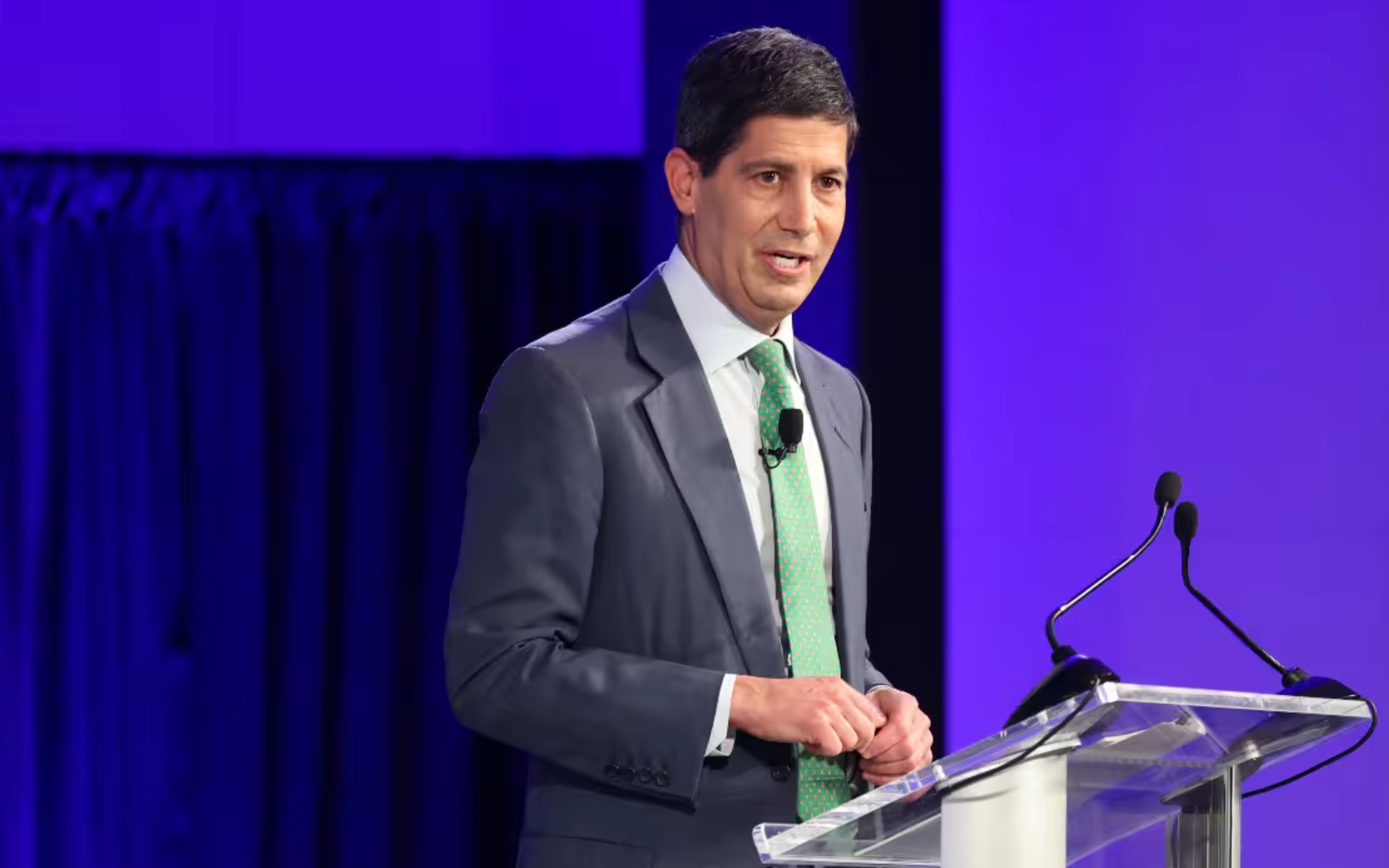
Who Is Kevin Warsh?
Kevin Maxwell Warsh, 55, is an American economist and former central banker. He served as a member of the Federal Reserve Board of Governors from 2006 to 2011, gaining experience during the global financial crisis. In that role he acted as the central bank’s key contact with Wall Street and represented the Fed in international forums. Today he is a distinguished fellow at the Hoover Institution at Stanford University and maintains a presence in financial circles through academic work and advisory roles.
Warsh’s background blends public and private sector experience. He previously worked at Morgan Stanley and later held senior policy roles at the White House National Economic Council early in his career. Warsh has also been involved with advisory groups and corporate boards, giving him deep exposure to markets and policy. His resume appeals to traditional economists and many in Washington who value central banking experience.
If confirmed, Warsh would step into leadership at the Federal Reserve at a crucial moment for the U.S. economy, which continues to balance inflation pressures with slowing growth.
What Warsh’s Nomination Means for Monetary Policy
A Warsh nomination would signal a mixed approach to Federal Reserve policy. Historically Warsh has been seen as more hawkish than some of his competitors, focusing on inflation risks and central bank credibility. However, in recent public remarks he has acknowledged the need for rate flexibility, aligning him more with Trump’s frustration with persistently high interest rates.
President Trump has publicly criticized Jerome Powell and the Fed for not cutting interest rates faster, even calling for much deeper reductions than most economists recommend. Analysts say Warsh may be more open to trimming borrowing costs, at least initially, but he still holds a record of caution on inflation that could restrain aggressive rate cuts.
Market traders are already positioning for potential policy shifts, with some risks priced into equities and bonds. If Warsh follows a path of cautious easing, stocks and risk assets might initially rally. But any sign of tightening or resistance to deep cuts could temper market enthusiasm.
Impact on Crypto and Risk Assets
Warsh’s views on cryptocurrency markets have been mixed. While some see him as open to financial innovation, he has also been critical of digital assets in past commentary, highlighting their volatility and uncertain role in financial policy.
That said, the Federal Reserve Chair does not set cryptocurrency regulations directly. Those fall mainly to agencies like the Securities and Exchange Commission and the Commodity Futures Trading Commission. What the Fed can influence is monetary policy through interest rates, which indirectly affects investor sentiment. A period of lower rates typically boosts risk assets, including cryptocurrencies.
But markets reacted with volatility to the news, with major tokens such as Bitcoin pulling back amid the broader selloff tied to uncertainty ahead of the nomination.
Rieder’s Fall from Favorite to Underdog
Just days ago Rick Rieder, head of global fixed income at BlackRock, was leading the prediction markets and widely discussed as a top contender. His policy stance was seen as somewhat dovish, advocating lower interest rates to support growth and credit markets.
Despite that early momentum, Rieder’s prospects declined sharply as Trump’s public signals and betting markets favored Warsh. Rieder’s history of political donations across party lines and his deep ties to Wall Street may have complicated his appeal within the Trump circle.
Other candidates, including Fed Governor Christopher Waller and economic advisor Kevin Hassett, were also in contention but slipped as the announcement drew near.
What Comes Next
President Trump’s official announcement Friday morning will mark the climax of a long and unusual process. Nominating the head of the Federal Reserve is among the most consequential economic decisions any president makes, since the chair’s policy choices influence interest rates, inflation and global financial stability.
Following the nomination, Warsh would need Senate confirmation to officially lead the Fed. That process can be contentious, especially given recent political tensions over central bank independence.
If confirmed, Warsh would inherit a central bank at a crossroads, forced to navigate competing demands for economic growth, inflation control and financial stability. His leadership will shape the economic environment for years to come.
In this moment of high stakes and shifting markets, a clear choice is emerging with Kevin Warsh poised to lead the Federal Reserve into a new chapter.
Tell us what you think about this major shift in Fed leadership and share this article with friends on social media.