If you just got comfortable scanning QR codes to activate your phone plan, get ready for another shift. The physical SIM card shrank into the embedded eSIM, but now the industry is erasing the dedicated chip entirely. Integrated SIM, or iSIM, moves your subscriber identity straight into your device’s main processor alongside the memory and CPU. This shift frees up internal space, cuts daily power drain, and locks down security against tampering. Here is exactly how this invisible standard works and why major chipmakers are pushing it forward.
The Invisible Evolution of the Mobile Subscriber Card
Moving from a physical piece of plastic to a digital profile required embedding a dedicated chip, but the latest iteration skips the extra hardware altogether. The subscriber identity module has evolved through five distinct generations of miniaturization over the decades. We started with full-size credit card shapes, shrunk down through mini, micro, and nano sizes, and finally landed on the embedded chip.
The standard eSIM technology introduced around 2016 was a major breakthrough. It allowed users to switch between different network operators without physically swapping out tiny pieces of plastic with a paperclip. However, that technology still requires a separate chip that is soldered directly to the motherboard. This separate component, known as the MFF2 form factor, measures roughly five by six millimeters and requires its own power supply and communication pathways.
The integrated standard changes the architecture completely. The entire functionality is now baked directly into the System-on-Chip of the device. By sharing the same silicon as the main processor, the iSIM form factor occupies less than 1 square millimeter of space. It completely removes the need for a secondary chip, streamlining the internal design of modern electronics.
| Technology Type | Physical Form | Placement Method |
|---|---|---|
| Nano SIM (4FF) | Removable Plastic | Inserted into external tray slot |
| eSIM (MFF2) | Dedicated Chip | Soldered to the circuit board |
| iSIM | Digital Block | Built into the main processor |
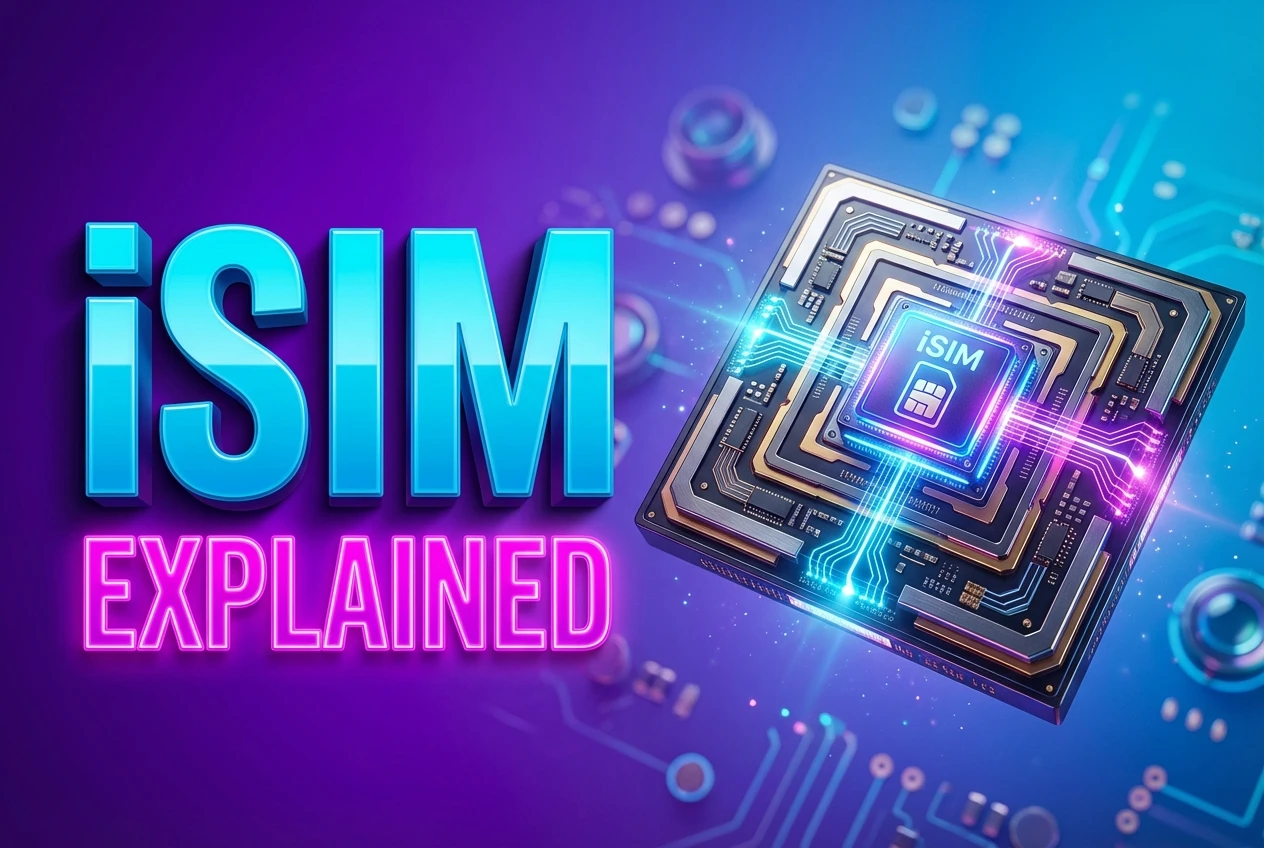
How Integrated SIMs Change the System on a Chip
By placing the subscriber identity module directly inside the processor, manufacturers eliminate the need for a separate physical communication pathway. This is not just a theoretical concept anymore. Qualcomm recently announced that its flagship Snapdragon 8 Gen 2 mobile platform has received GSMA security certification for integrated network capabilities. This certification proves that a built-in module can offer the exact same level of cyber-protection as a traditional physical card.
The security architecture relies on a specialized component. The technology utilizes a dedicated Secure Processing Unit that operates independently within the main processor chip. This isolated area provides a walled-off environment to handle network authentication, cryptographic keys, and sensitive user data without exposing it to the rest of the phone’s operating system.
The world’s first security certification of an iSIM by the GSMA follows several years of intense development work by Qualcomm Technologies and Thales.
This achievement was the result of a major collaboration between silicon designers and digital security firms. You can read more about the official security certification announcement straight from the chip manufacturer. Before getting the official stamp of approval, Vodafone, Qualcomm, and Thales collaborated on a working smartphone proof of concept using a modified Samsung Galaxy Z Flip 3.
Four Concrete Ways Your Battery and Device Benefit
Dropping the standalone chip gives device makers more physical room and cuts the constant power draw required to keep a network connection active. For the consumer, this translates directly into a better daily experience with their hardware.
When communication happens entirely within the boundaries of the main processor, efficiency skyrockets. An external embedded chip requires constant voltage to remain active and ping the network. Because the integrated version does not need to send electrical signals across the motherboard, it is significantly more power-efficient than any previous generation. This internal routing reduces overall power consumption and extends the battery life of the host device.
Beyond battery life, the shift brings several other major improvements to the hardware ecosystem. The technology directly addresses pain points for both the people building the devices and the people buying them. Here are the main advantages driving the adoption:
- Zero physical space required on the main circuit board
- Lower manufacturing costs by eliminating separate components
- Enhanced protection against physical tampering and hacking
- Support for up to 16 different network profiles simultaneously
This level of flexibility means you could theoretically hold personal, business, and multiple international travel plans on a single phone without ever touching a SIM tray. The intense development work by Thales ensures that swapping between these digital profiles happens almost instantly.
The 9 Billion Device Push Beyond Standard Smartphones
While premium phones get the headlines, the real target for this built-in connectivity is the booming market for smart home gadgets and industrial sensors. Telemetry devices, smartwatches, tracking tags, and connected cars all need reliable cellular access, but they often lack the physical space for a traditional SIM tray or even a dedicated embedded chip.
Market analysts at Counterpoint Research report the digital SIM market is entering a period of hyper growth right now. They project an astonishing nine billion cumulative shipments of capable devices between 2024 and 2030. Furthermore, analysts expect that roughly 70 percent of all shipped cellular-based electronics will feature either embedded or integrated technology by the end of the decade.
The technology has the potential to bring more efficiency to devices by lowering costs, size and complexity. This makes it ideal for use in a wide range of IoT applications.
This growth is heavily dependent on standardization. The GSMA recently published the SGP.32 technical specification, which defines the exact architecture for Remote SIM Provisioning specifically tailored for the Internet of Things market. You can review the projected industry shipment volume numbers to see just how fast this sector is expanding.
| Market Metric | Projected Figure | Target Year |
|---|---|---|
| Total Capable Device Shipments | 9 Billion | 2030 |
| Global Devices Using Digital Connectivity | 4.9 Billion | 2030 |
| Annual Growth Rate (CAGR) | 160 Percent | 2024 to 2030 |
As sensor networks scale up across cities and factories, sending a technician to manually swap out physical cards becomes impossible. The new digital standard allows administrators to push network updates to thousands of remote sensors simultaneously over the air.
Why Network Operators Keep Stalling the Rollout
Despite the hardware being ready, carriers around the world lack a universal standard to guarantee seamless profile switching across borders. The technology is undeniably superior on a technical level, but widespread adoption requires coordination among thousands of different telecom companies.
One of the main barriers is operator compatibility across different global regions. Currently, there is no strictly enforced universal regulation that forces all networks to support the integrated processor standard. This means a phone might have the capability built into its processor, but the local cell carrier might still demand a physical card to activate an account.
User awareness also remains a significant hurdle. A large portion of the public still prefers the tactile reassurance of holding a physical card. They know exactly how to move their phone number by simply pulling the tray out of their old device and pushing it into the new one. Telecom providers need to create simpler, foolproof digital activation methods before the general public fully accepts the transition.
Frequently Asked Questions
Does iSIM drain smartphone battery life?
No, it actually improves battery performance. Because the communication happens entirely within the main processor chip, it does not require the continuous electrical power draw that older embedded chips and physical cards need to maintain a network connection.
Can I remove an iSIM from my device?
You cannot physically remove it because the module is permanently built directly into the device’s main processor. However, you can digitally delete, add, or switch network profiles through your device’s settings menu at any time.
Which phones currently support integrated SIM technology?
Adoption is currently in the early stages, but devices powered by the Qualcomm Snapdragon 8 Gen 2 processor feature the necessary hardware. A modified Samsung Galaxy Z Flip 3 was also used in early successful proof-of-concept demonstrations.
How do I transfer my number to a new phone without a physical card?
You transfer your number digitally by scanning a QR code provided by your network operator, or by logging into your carrier’s app on the new device. The network then beams your credentials directly into the secure processing unit over Wi-Fi.
Is an integrated processor chip more secure than a standard card?
Yes, it offers higher security. Because the identity module is built into a walled-off section of the main processor, it cannot be physically removed, stolen, or tampered with by a bad actor who gains physical access to your device.
As the cellular industry moves toward this new digital architecture, the traditional plastic card is finally reaching its end, making the #IntegratedSIM the next great leap for global #MobileConnectivity in our daily lives.