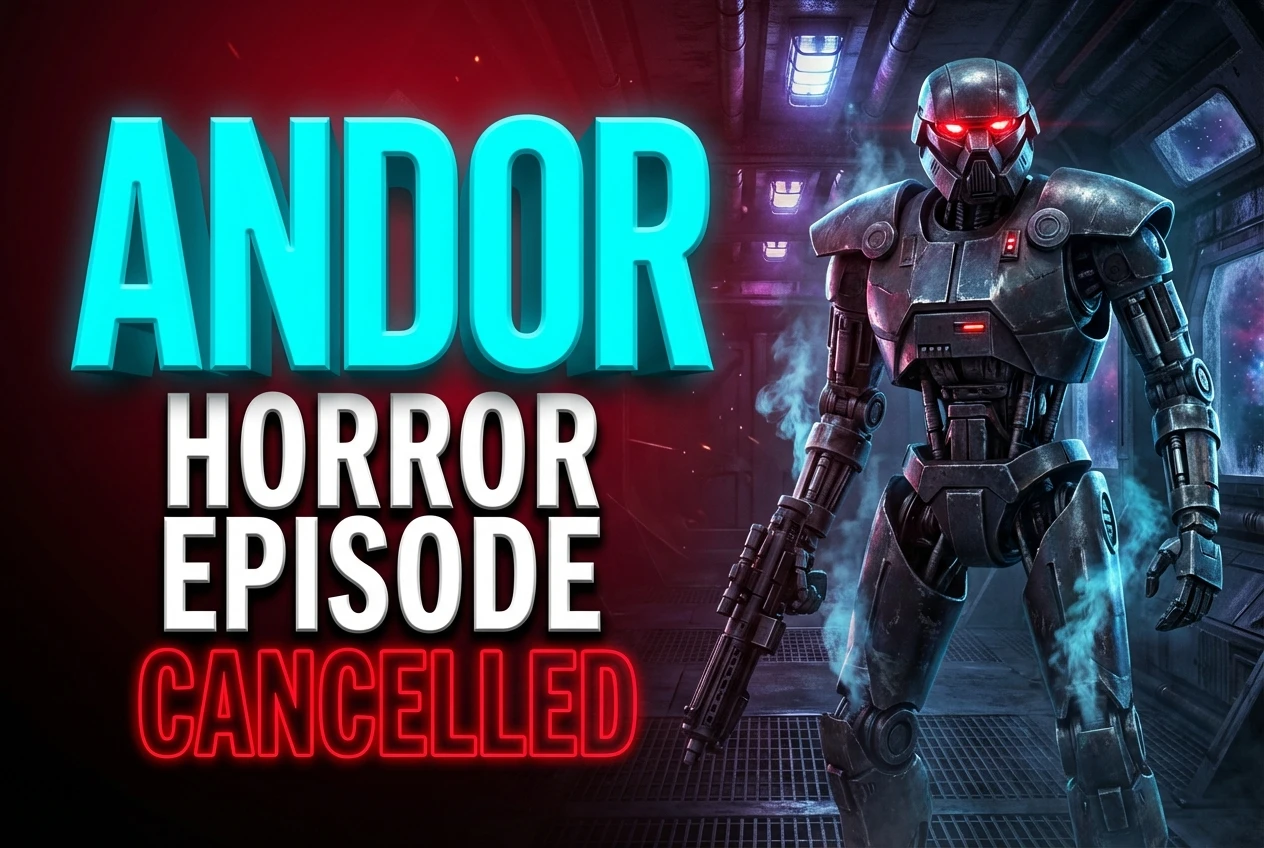
Tony Gilroy had a finished script sitting on his desk that sounded like a science fiction dream. It was a standalone horror story featuring the rogue security droid K-2SO hunting people through the dark corridors of a tanker ship. But Disney executives took one look at the price tag and pulled the plug. Now, right in the middle of the final season’s release schedule, fans are realizing exactly what they lost to corporate cost cutting.
A Monster Movie Set on Yavin
The script for Episode 209 was entirely plotted out and ready for cameras by Dan Gilroy. The premise was simple but effective, placing characters on a grotesque tanker ship docked at Yavin with nowhere to run. Inside the ship, a rogue KX security unit had gone berserk, turning a standard Star Wars adventure into a claustrophobic survival story.
This missing hour of television would have served as the official introduction for K-2SO, the dryly sarcastic and deadly droid first seen in Rogue One. Instead of a traditional meeting, the plan was to show the cold and methodical menace of a KX unit that does not malfunction, but simply hunts. Fans immediately began drawing comparisons to atmospheric thrillers like Alien and Dead Space when the details leaked.
The revelation came straight from Tony Gilroy during a recent Entertainment Weekly interview outlining the budget cuts that reshaped the final season. He did not hold back his frustration about losing such a unique piece of the puzzle. The creative team knew they had something special, but the studio simply refused to write the check.
Dan Gilroy wrote an amazing, entirely self-contained episode that was episode 209. It was an amazing episode that was like a horror movie. It was sort of like a monster movie with K2 on it. It was really cool. We could not afford to do it.
People across the internet have been vocal about their disappointment regarding the scrapped horror concept for the rogue droid and what it represents. If there is one corner of the internet where you can count on passionate feedback, it is the Star Wars subreddit. Users expressed a deep desire for something gritty and R-rated in tone, heavily criticizing the studio for playing it safe.
The Math Problem Behind the Cancellation
Season 2 of the series reportedly carries a production budget of roughly $290 million, placing it among the most expensive television projects ever made. That number sounds huge, but the economics of streaming shifted dramatically between the first and second seasons. Following the return of CEO Bob Iger, the studio implemented a strict belt-tightening strategy across all divisions.
Tony Gilroy noted that asking for extra funding felt impossible when the company was simultaneously laying off thousands of employees. Disney’s direct-to-consumer segment finally reported a profit for the first time in fiscal year 2024, and executives are clearly focused on keeping those margins out of the red. They are carefully monitoring the total global Disney Plus subscriber count, which reached 131.6 million by the fourth quarter of 2025.
Here is why the budget argument frustrates so many viewers:
- The studio routinely drops hundreds of millions into shows that receive mixed or negative reviews.
- The Acolyte secured over $180 million despite highly polarizing reception.
- Obi-Wan Kenobi cost $150 million but looked visibly cheaper in its production design.
- This specific series actually earned critical acclaim and a dedicated audience.
| Star Wars Project | Reported Budget | Critical Reception |
|---|---|---|
| Andor (Season 2) | $290 Million | Acclaimed |
| The Acolyte | $180 Million+ | Mixed |
| Obi-Wan Kenobi | $150 Million | Mixed to Negative |
| Andor (Season 1) | $120 Million | Acclaimed |
The contradiction stings. Fans see a creator who successfully fixed Rogue One in post-production and delivered a masterpiece first season, yet he is the one getting his best ideas rejected. These recent corporate economic shifts at Disney have real consequences for the stories that actually make it to the screen, as detailed in recent recent corporate economic shifts at Disney analysis reports.
What Fans Missed Before the Finale
You are now watching the final episodes drop weekly, knowing a better origin story was left in a filing cabinet. Disney shifted the second season to an unorthodox release format, dropping three episodes per week over a four-week period ending in May 2025. This compression already had fans worried about pacing, and the loss of a self-contained detour only adds to that anxiety.
The initial premiere still pulled strong numbers, with 1.2 million households tuning in during the first six days. Viewership peaked at 171 million minutes watched on the single day the final batch of episodes was released. People are clearly invested in this story, which makes the studio’s lack of faith in a standalone creative risk even harder to understand.
If they had greenlit the episode, it would have offered a completely different flavor of storytelling:
- A break from the dense political dialogue to focus purely on visual suspense.
- A chance to see imperial technology acting as a genuine terror threat.
- A stronger emotional foundation for the eventual partnership between the characters.
- A genre-bending experiment that proves the franchise can handle mature themes.
Gilroy’s vision remains strong through the episodes we did get, but you can feel the financial constraints creeping into the margins. He has said himself that if he does not show how people get chewed up and forgotten by the rebellion, then he has failed his mission. It is just a shame that one of the most interesting ways to show that brutality was deemed too expensive to exist.
The loss of this episode proves that even the most critically praised #StarWars projects are vulnerable to the spreadsheet, leaving #AndorSeason2 just a little less bold than it could have been.