For almost three decades, readers accepted that the Boy Who Lived was entirely alone in the world, left on a doorstep in Surrey with only his terrible aunt and uncle for family. But the internet is currently reeling from a rediscovered piece of history that changes how people view the orphaned wizard. According to a viral report that surfaced in early 2025, millions of fans are only just learning the names and tragic fates of the people who raised James Potter.
A Decade-Old Secret Hidden in Plain Sight
The irony of this internet frenzy is that the information has been sitting online for ten years. When the author completely redesigned her digital platform in September 2015, she quietly published an essay tracing the boy wizard’s entire ancestry. The goal was to pivot the site from a browser-based game into a mobile-friendly encyclopedia and news hub for readers.
“The fascinating story of the Potter family, from the author herself, will enthral everyone interested in this world,” stated Susan L. Jurevics, the chief executive officer during the relaunch. Yet, with over 600 million books sold worldwide as of early 2023, only a dedicated fraction of readers ever found their way to that specific post.
According to the canon history, Harry’s paternal grandparents were named Fleamont and Euphemia Potter. They were well-respected members of the magical community, and Fleamont was a remarkably talented duelist. More importantly, he was the man responsible for the vast piles of gold sitting inside Gringotts vault 687.
Before retiring, he took the already comfortable family inheritance and quadrupled the family gold through cosmetic invention. He created Sleekeazy’s Hair Potion, a commercial remedy promising that two drops could tame even the most bothersome hair. Entertainment outlets detailed how the family amassed its wealth extensively during the initial 2015 reveal, but the details slowly faded from public memory until now.
| Generation | Key Figures | Historical Contribution |
|---|---|---|
| 12th Century | Linfred of Stinchcombe | Originated the surname and built the foundational wealth through medical potions. |
| Ancient Era | Hardwin & Iolanthe | Brought the legendary Deathly Hallow into the family bloodline. |
| Mid-20th Century | Fleamont & Euphemia | Invented modern hair care remedies and expanded the vault. |
| Late 20th Century | James & Lily | Passed the inheritance down while fighting in the First Wizarding War. |
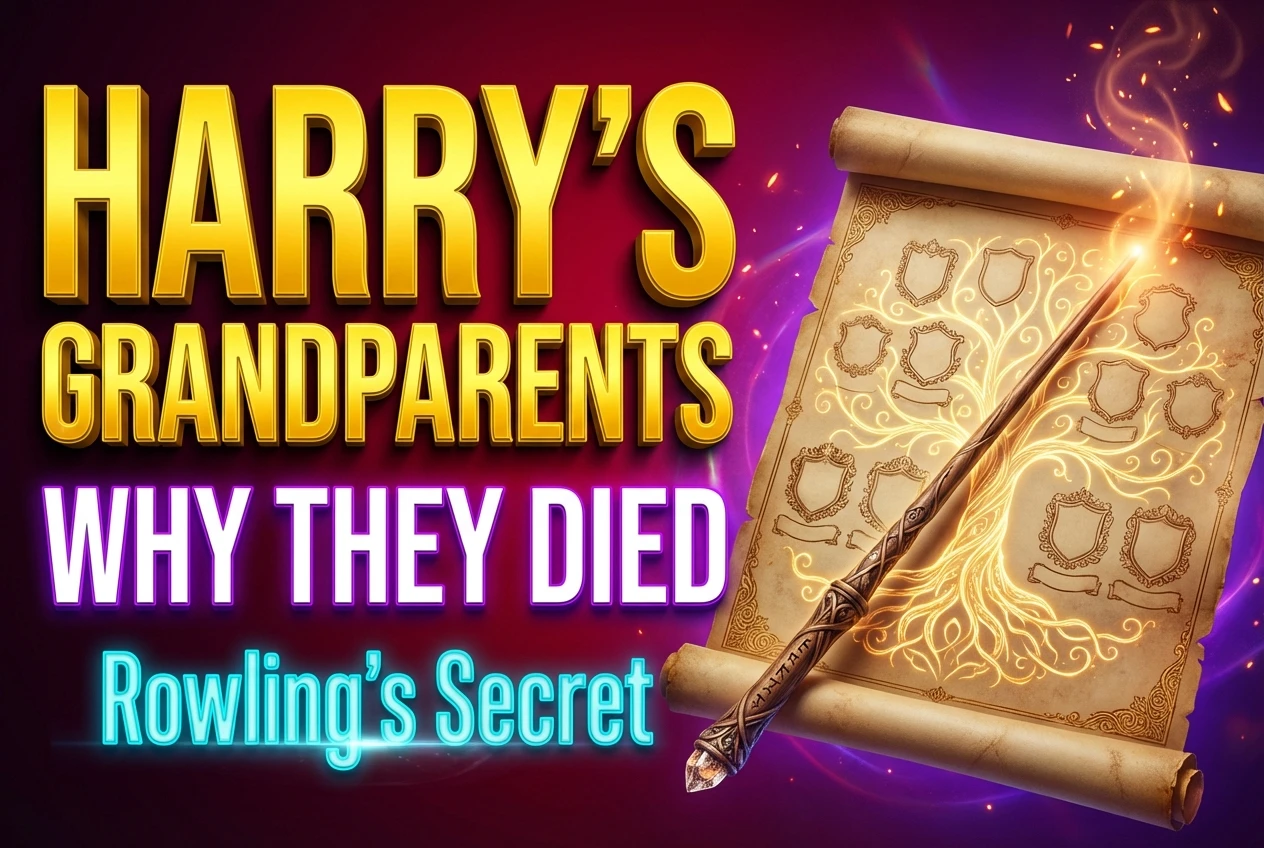
The Ruthless Plot Decision That Left Harry Alone
If James Potter came from such a wealthy, established family, readers naturally questioned why none of them stepped in when tragedy struck at Godric’s Hollow. The answer is a mix of tragic biological timing and narrative necessity.
Sometimes, a writer has to be cruel to make a story work.
“It was more interesting, plot-wise, if Harry was completely alone. So I rather ruthlessly disposed of his entire family apart from Aunt Petunia … I just needed them out of the way so I killed them.”
In a retrospective interview cited by fans during the recent viral surge, the author explained exactly why she ruthlessly disposed of his entire family before the first chapter even begins. If the boy had a loving set of grandparents waiting in the wings, the emotional stakes of his abusive childhood with the Dursleys would vanish entirely.
In the established timeline, the elderly couple lived full lives. They survived long enough to see James marry Lily Evans, but they died of Dragon Pox within days of each other shortly afterward. They never got the chance to meet their famous grandson.
On the other side of the tree, Lily’s parents were ordinary humans who passed away from natural causes before the events of the first book. This clean sweep of the older generation ensured the protagonist would have to face his destiny without the safety net of supportive relatives.
How the Cloak of Invisibility Survived Generations
The viral essay also answers another lingering question about a legendary magical artifact. James Potter inherited a flawless Invisibility Cloak, which he eventually passed down to his son. The origins of that specific item trace back centuries before Fleamont or Euphemia were even born.
The artifact entered the bloodline when Hardwin Potter married Iolanthe Peverell. She was the granddaughter of Ignotus Peverell, the original owner of the third Deathly Hallow. Because Ignotus had no male heirs, the cloak passed to Iolanthe, who maintained the strict tradition of keeping its existence a tightly guarded secret.
Despite this incredibly ancient lineage, the family was actually excluded from the Sacred Twenty-Eight list of pure-blood families compiled in the 1930s. The compiler of that famous directory suspected they had tainted blood for a very simple reason: their surname sounded far too common to be exclusively magical.
The name originated from a 12th-century eccentric named Linfred of Stinchcombe. His local nickname, “the Potterer,” eventually evolved into just Potter over the generations. He was a pioneer of magical medicine, and his early experiments laid the groundwork for many potions still used in hospital wards today.
The family history breaks down into a few consistent traits passed through the centuries:
- A knack for inventing highly profitable liquid remedies
- Generational stewardship of the perfect Invisibility Cloak
- A stubborn genetic predisposition for notoriously messy hair
- A tendency to marry strong-willed, talented witches
The Financial Power of Unexplored Magical Lore
The sudden internet fascination with a decade-old lore drop highlights a broader reality for the entertainment industry. There is a deep, lucrative hunger for stories set in this universe that go beyond the original seven books.
The franchise carries an estimated brand value of $25 billion, and the publishing side shows no signs of slowing down. Pottermore Publishing reported a record annual revenue of £48.8 million for the fiscal year ending in March 2024. According to industry business sales trends, this growth was driven heavily by digital audiobooks and reading formats.
Physical media is mirroring this exact trend. Bloomsbury recently confirmed a 30 percent jump in sales to £343 million, proving that tangible books still hold serious weight in the market.
Market analysts have also tracked a 1,004 percent increase in demand for premium illustrated editions between 2022 and 2023. Fans are actively looking for ways to engage with the history and background details of the universe, searching for the exact kind of world-building that the 2015 essays provided.
What the Upcoming Television Reboot Could Change
With the recently announced reboot series on HBO Max heading to screens in the future, the creative team has a unique opportunity. They can incorporate a decade of supplementary writing directly into the main narrative, offering viewers fresh perspectives and deeper dives into unseen characters.
Television adaptations naturally require more screen time to fill out seasonal arcs. A single throwaway line in a novel about an inheritance could easily become an entire flashback sequence on screen. If the showrunners decide to expand the timeline, they have a rich tapestry of established history to pull from.
Here is what the community hopes the television writers might include:
- Flashbacks to Fleamont inventing cosmetics and building the family wealth
- A deeper look at the ordinary lives of the Evans family before Lily left for school
- The emotional fallout of the Dragon Pox tragedy on young James Potter
- Visual confirmation of the ancestral home where the older generation lived
The renewed interest in these fallen characters proves that a good story never really stops expanding in the minds of its readers. Every missing branch on a fictional family tree is just an invitation to ask more questions. As production gears up for the new adaptation, it feels like the perfect time to revisit the #HarryPotter history that shaped the boy under the stairs, proving that #WizardingLore still has plenty of secrets left to uncover.