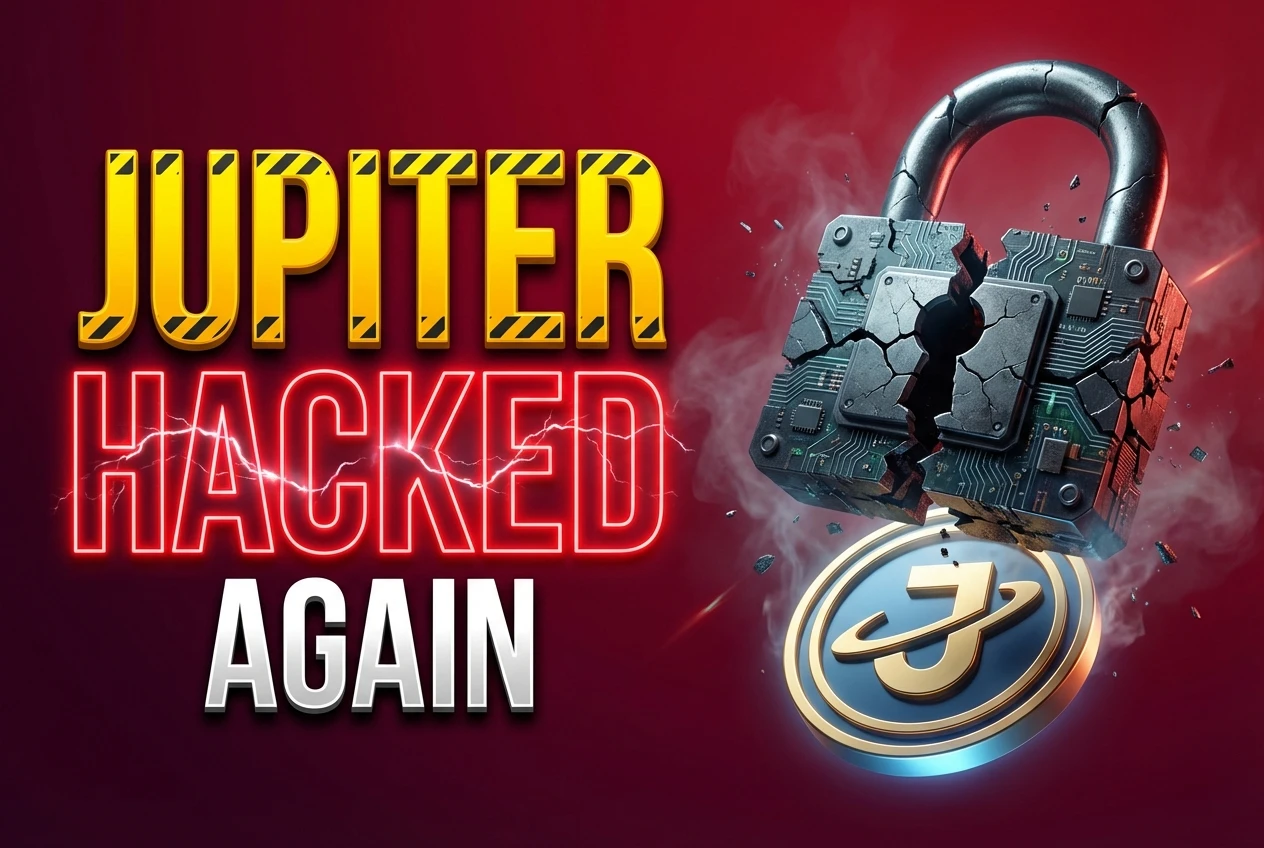
Early Thursday morning, a rogue tweet turned a trusted cryptocurrency platform into a high-stakes trap. The official X account for Jupiter Exchange was compromised on February 6, 2025, broadcasting a fraudulent memecoin promotion to over half a million followers. Within minutes, unsuspecting traders poured their money into a token designed to go straight to zero, proving once again that in the world of decentralized finance, your strongest asset is your skepticism.
A Twenty Million Dollar Illusion Built in Minutes
The attack began when the main @JupiterExchange handle started urging users to buy into new tokens named $MEOW and $DCOIN. Because the message came from an account that investors had trusted for years, the market reaction was explosive. The scam $MEOW token rapidly accumulated a market capitalization of $20 million as excited traders rushed in, hoping to catch the next big ecosystem airdrop.
That excitement evaporated just as quickly. The attackers pulled the liquidity from the fraudulent token, leaving early buyers holding worthless digital assets. The fallout immediately bled over into Jupiter’s legitimate operations. The price of the native JUP token plummeted 12 percent, falling from $0.85 down to $0.75 in a matter of minutes as rumors of a larger protocol breach began to circulate.
Fear drives volume, and the data paints a clear picture of the panic. Trading volume for JUP paired against Bitcoin and Ethereum surged by 300 percent during the first hour of the crisis. Traders were frantically dumping their holdings, unsure if the underlying exchange infrastructure had been compromised alongside the social media account.
Traders lost millions instantly on this Jupiter account hack … literally in a matter of minutes.
That stark assessment came directly from Beanie, the founder of GM Capital, who watched the chaos unfold in real time. His reaction mirrored the broader crypto community, which was left scrambling to separate fact from fiction while the official channels remained locked out of their own platform.
Core Systems Survived the Social Chaos
When an exchange account starts posting suspicious links, the immediate fear is that the actual financial reserves are being drained. Fortunately for Jupiter users, the breach was entirely isolated to social media credentials. The protocol itself, which boasted a historic high Total Value Locked of $2.836 billion shortly before the incident, never actually lost a single cent of customer deposits.
The defense held up because of how decentralized platforms structure their treasuries. Co-founder Siong Ong quickly stepped in to clarify the situation through alternative channels, verifying that Jupiter’s core systems remained secure due to multi-signature protection. This security model requires multiple separate cryptographic approvals to move funds, making it nearly impossible for a single compromised employee or social media manager to drain the vaults.
While the founders worked to regain control, the official Jupiter Mobile communication handle issued an urgent warning to the community, pleading with users: “DO NOT CLICK LINKS!!! DO NOT BUY!!!” The team eventually wrestled back control of the X account, but the reputational damage had already rippled across the Solana ecosystem.
Three Costly Strikes for Platform Trust
This latest incident forces the decentralized exchange into a very uncomfortable spotlight. The community is unforgiving when it comes to security lapses, and Jupiter is developing a track record that makes institutional investors nervous. This is not the first time the platform’s user base has been targeted by sophisticated bad actors.
Rewind to January 2024, and the protocol was battling a very different kind of nightmare. During the highly anticipated JUP token launch, a single attacker managed to game the system using automation. The bad actor manipulated over 9,000 distinct wallets to siphon off 1.85 million tokens, walking away with roughly $1 million in stolen value. It was a technical exploit that left thousands of legitimate users empty-handed.
Then came the summer of 2024. In August, the security team had to sound the alarm over a malicious browser extension targeting Solana users called Bull Checker. This malware intercepted legitimate transactions and quietly redirected funds straight into the pockets of the attackers.
| Incident Date | Attack Vector | Primary Impact |
|---|---|---|
| January 31, 2024 | Automated Airdrop Exploit | $1M stolen via 9,000 automated wallets |
| August 19, 2024 | Bull Checker Chrome Extension | Transaction interception and wallet draining |
| February 6, 2025 | X Account Hijacking | $20M fake market cap and 12% price crash |
Jupiter did try to make things right after the 2024 airdrop disaster. The exchange reallocated drops to 10,000 affected users who had their funds drained, hoping to salvage their reputation. But apologies and reimbursements only go so far when users are continually forced to wonder if their digital assets are truly safe.
When evaluating how platforms handle these crises, the timeline of response becomes critical:
- The malicious tweet was identified within minutes of going live.
- Community leaders began flagging the scam contract immediately.
- Alternative official channels pushed warnings while the main account was locked.
- Market prices began recovering once multi-signature safety was verified.
The Rising Threat of Social Media Drainers
If you have been paying attention to the blockchain space over the last two years, this strategy feels painfully familiar. Hackers are realizing that trying to break complex cryptographic smart contracts is hard work. It is much easier to simply steal a password, post a link, and let human greed do the rest of the heavy lifting.
The numbers backing up this trend are sobering. According to the Scam Sniffer 2024 Web3 phishing report, bad actors stole a staggering $494 million using wallet drainers alone. That represents a 67 percent increase from the previous year, targeting roughly 332,000 unique wallet addresses. Criminals are treating this like a highly scalable business model.
The broader security landscape looks even worse as we move through 2025. Chainalysis reports that $2.17 billion was stolen from crypto services in just the first half of the year. This data detailing the surge in wallet heists highlights a very specific shift in tactics.
Why are social media attacks becoming the weapon of choice? The mechanics explain a lot:
- Users naturally drop their guard when reading posts from verified accounts.
- Fear of missing out creates a sense of urgency that bypasses rational checking.
- Malicious smart contracts look identical to legitimate ones on the surface.
- Once a transaction is signed, blockchain immutability prevents any reversal.
Jupiter is the largest decentralized exchange aggregator on the Solana network, processing over $1.2 trillion in cumulative volume. That kind of scale paints a permanent target on their back. Every vulnerability, whether in their code or their social media management software, will be tested continuously by syndicates looking for a quick payday.
The cleanup from this February breach is still ongoing. Some traders are calling for a full boycott, while others view it as a painful but necessary lesson in operational security. It takes years to build confidence in a financial platform, but it only takes one compromised password to tear it down. As platforms continue battling bad actors, the ultimate responsibility for #CryptoSecurity still falls squarely on the individual holding the digital keys, reminding everyone that trading on a #JupiterExchange requires constant vigilance.
Disclaimer: This article does not constitute financial advice. Cryptocurrency investments and interactions with decentralized exchanges carry significant risk, including the total loss of funds due to scams or smart contract exploits. Always consult a licensed financial advisor and conduct thorough independent research before making any digital asset investment.