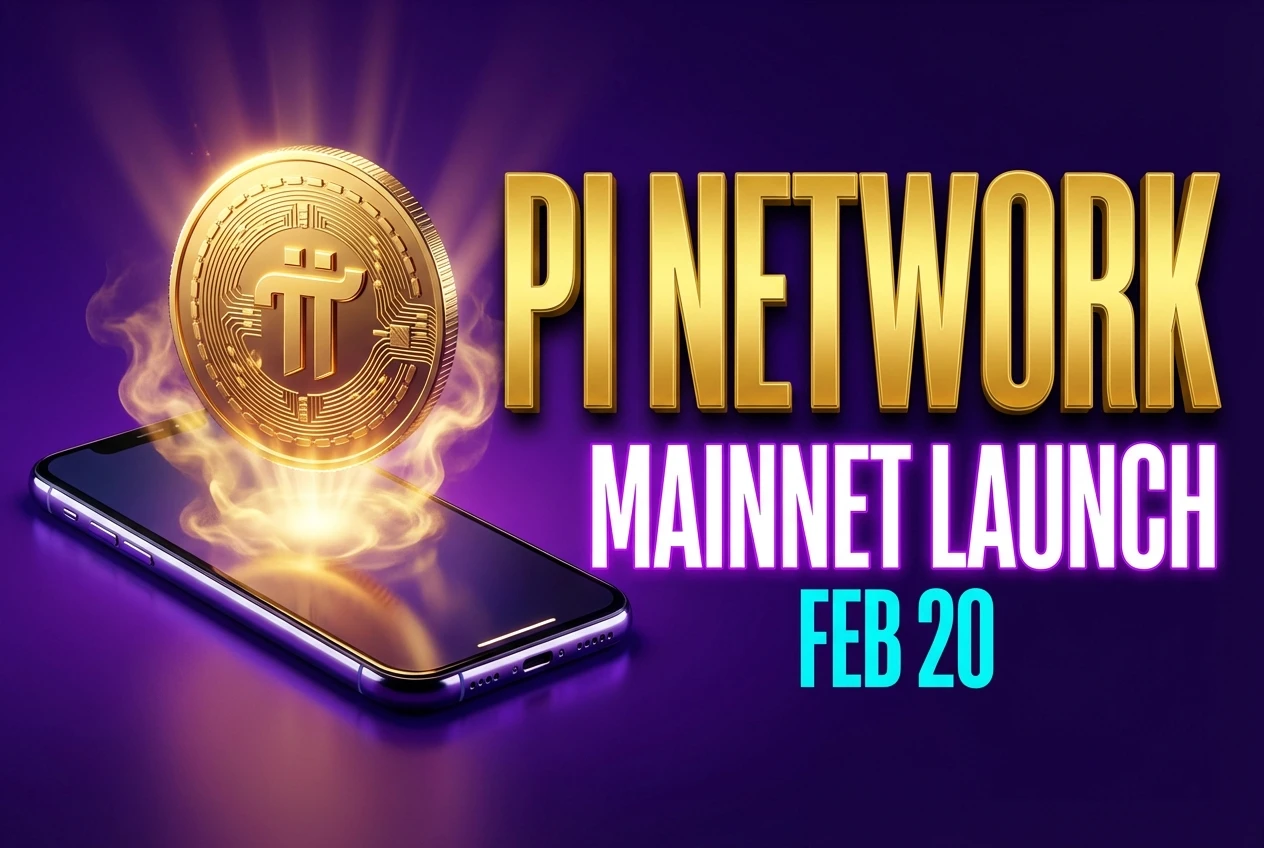
For more than half a decade, millions of people have been tapping a button on their smartphone screens to accumulate a digital currency they could not actually spend. That isolation ends on February 20, 2025. After years of operating in an enclosed environment, developers are dropping the firewall to allow external trading and transfers. It is a critical turning point for an ecosystem built entirely on the promise of mobile accessibility.
The core concept behind this project was always about lowering the barrier to entry. While traditional digital currencies require expensive hardware and cheap electricity, this platform let anyone with a smartphone participate. Now, the market will finally decide what those years of screen taps are actually worth.
Removing the Wall Around 19 Million Accounts
At exactly 8:00 AM UTC on launch day, the developers pull down the network restrictions that have kept the ecosystem completely isolated since late 2021. During that Enclosed Mainnet period, participants could mine and interact within the application, but they could not move their holdings to outside wallets or exchanges. This controlled environment gave the parent company, SocialChain Inc., time to build utility and verify the identities of its global user base.
Identity verification became the primary bottleneck for the community over the last two years. The network instituted a mandatory Know Your Customer protocol to ensure users were real people rather than automated scripts. This slow rollout served as a regulatory moat to ensure compliance with global anti-money laundering laws before any actual monetary value was attached to the tokens.
To officially trigger the transition to the open mainnet, the core team required three specific milestones to be met by the community. These targets were designed to ensure the network was stable enough to handle external traffic.
- More than 10.1 million users completing their blockchain migration.
- A minimum of 100 distinct applications ready for immediate use.
- Zero remaining external dependencies that could delay the software upgrade.
The founding team, led by Stanford graduates Dr. Nicolas Kokkalis and Dr. Chengdiao Fan, maintained that prioritizing accessibility and inclusivity was always the primary goal. With 19 million identity-verified accounts ready at launch, the infrastructure faces its first real stress test under public market conditions.
The Exit Strategy Problem for Early Adopters
Accumulating digital coins for free sounds fantastic until everyone tries to cash out on the exact same day. Because the ecosystem has been closed for so long, millions of early participants have been holding their balances with no way to liquidate them. The moment exchange listings go live, the network faces an immediate threat of immense downward price pressure.
Speculators have debated the starting price for months, with some community members hoping developers might set an initial listing price at $3.14 as a playful nod to the mathematical constant. However, pre-market futures on certain trading platforms have shown IOU contracts hovering around $50. That massive gap between theoretical value and early speculative trading creates a highly volatile environment for opening day.
Historical precedent paints a grim picture for tokens tied to simple participation models. Projects based on walking, tapping, or playing games often see their value drop sharply when the supply of new sellers overwhelms the demand from actual buyers. If businesses do not step up to accept these tokens as payment for real goods and services, the price could struggle to find a stable floor.
| Network Metric | Reported Figure |
|---|---|
| Total Token Supply | 100 Billion |
| Community Allocation | 80 Percent |
| Core Team Allocation | 20 Percent |
| Successfully Migrated Users | 10.14 Million |
Legal Headwinds and Government Pushback
Not every regulatory body is thrilled about an entirely new alternative currency flooding the local market. As the project gained traction across Asia, authorities began scrutinizing the operation and warning citizens about potential financial risks. Regional governments are particularly sensitive to platforms that promise future wealth without clear legal frameworks protecting the consumers.
The Vietnam Ministry of Public Security issued formal advisories warning that using the token for payments is strictly illegal under local law, carrying fines of up to 100 million VND. Because there is no regulatory authority to prevent fraud or market manipulation in these jurisdictions, local experts have repeatedly voiced concerns about users exposing their personal data for empty promises.
“I am not here to talk about technology today; I am here to talk about trust. Together, we are building not just a cryptocurrency, but a global ecosystem.” — Dr. Nicolas Kokkalis, Co-founder
These international tensions highlight the complex reality of launching a borderless financial product. The founding team must navigate strict European compliance frameworks and varying Asian regulations simultaneously. Furthermore, corporate governance issues have surfaced stateside, including a federal lawsuit filed in California against SocialChain Inc. regarding early investment contracts and token distribution mismanagement.
Building an Economy Without High-End Hardware
Bitcoin requires warehouses full of specialized computers consuming entire power grids just to process transactions. This mobile alternative takes a fundamentally different approach to security and consensus. By utilizing the Stellar Consensus Protocol, the software relies on a trust-based security circle model that runs quietly in the background of a standard phone without draining the battery.
This technical architecture is what allowed the project to grow so quickly. When anyone can participate just by downloading an application, the user base expands exponentially. However, having millions of users is only half the battle. The true challenge is convincing independent businesses and service providers to accept these tokens in exchange for real-world goods.
- Eliminates the need for expensive graphics cards or specialized mining rigs.
- Reduces the environmental impact of securing the blockchain network.
- Rewards participants based on their social connections and consistent daily check-ins.
Looking ahead, there is already quiet speculation among supporters about seeking institutional legitimacy. Some community leaders hope to eventually file for spot exchange-traded funds, drawing parallels to how Bitcoin slowly gained Wall Street’s approval. For now, those ambitions take a back seat to simply surviving the initial shock of the open market after six years of development.
As the project steps out of its walled garden and into the harsh light of public trading, the true test of this financial experiment begins. It will soon become clear whether an accessible smartphone application can establish a stable daily medium of exchange, or if the initial sell-off will cement it as just another volatile footnote in #CryptoHistory and the broader #PiNetwork journey.
Disclaimer: This article is for informational purposes only and does not constitute financial or investment advice. Cryptocurrency markets are highly volatile, and trading newly listed tokens carries significant financial risk. Always consult with a licensed financial advisor before making investment decisions.