If you are staring at the budget end of the current wearable lineup, you have a difficult decision ahead of you. The second generation Apple Watch SE arrived in September 2022, and the technology industry has moved forward significantly since that launch. Buying one today means accepting older hardware while competitors drop their prices on feature-packed alternatives. You have to ask yourself if the entry-level experience still holds up, or if you are simply paying for a brand name on outdated tech.
Apple has updated nearly every other product in its catalog over the past three years. We have seen new phones, completely redesigned laptops, and updated audio gear. But the budget-friendly smartwatch has been left entirely untouched since its last hardware refresh. This creates a strange situation for budget-conscious buyers who want the ecosystem benefits without paying flagship prices.
The Shrinking Price Gap Between Tiers
A major factor in this smartwatch’s continued relevance has always been its clear affordability. Apple deliberately positioned it as the default choice for people who do not need all the premium bells and whistles. However, the pricing landscape looks completely different today than it did a few years ago. Retail discounts have fundamentally changed how buyers evaluate these devices.
The device maintains a base retail price of $249 for the 40mm GPS model. On paper, that sounds like a reasonable entry point. But the flagship Series 10, which starts at $399, frequently drops to $329 on sale at major retailers. That narrows the gap to just $80 between a three-year-old budget watch and a brand new flagship device with a vastly superior display.
Here is how the current pricing landscape breaks down for consumers:
- The base SE model sits at $249 but often sees aggressive holiday discounts down to $149.
- The Series 10 provides larger screens and faster charging for a slight premium when on sale.
- Refurbished older flagship models often sit right at the $200 mark.
- Competitors are pushing fully featured smartwatches under $250 year-round.
When you look at those numbers, stepping up to a better model feels much more logical. For a little extra cash, you get a brighter screen, a faster internal chip, and better health tracking. The entry-level model is critical for capturing the entry-level segment, but Apple needs to rethink the value proposition to keep it competitive.
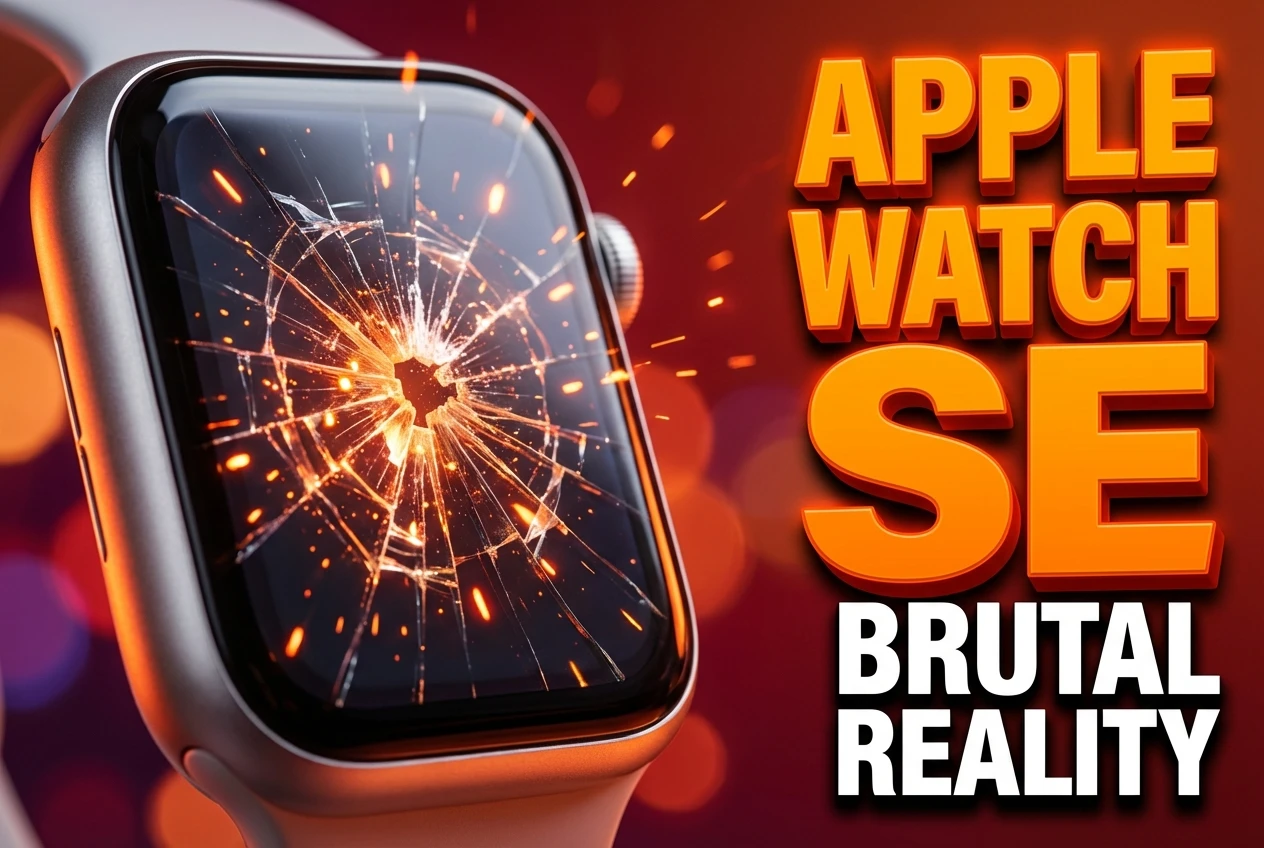
Three Years With the Same S8 Processor
Underneath the glass, the current budget watch is powered by the S8 SiP. This is the exact same silicon used in the Series 8 and the original Ultra from 2022. It was a perfectly capable chip at launch, but software demands have increased heavily since then. Launching heavy applications, controlling audio playback, and even simple tasks like loading a complex workout can take just a bit too long compared to newer flagship devices.
Apple noted at launch that this chip was 20 percent faster than the S5 found in the original first generation SE. That sounded great in 2022. Today, it feels sluggish when running the latest software updates. A jump to the S9 processor from 2023 would resolve almost all of these friction points.
| Feature Comparison | Current SE (S8 Chip) | Flagship (S9/S10 Chip) |
|---|---|---|
| Siri Processing | Requires cloud connection | Fully on-device |
| Double Tap Gesture | Basic accessibility only | Native system integration |
| App Launch Speed | Noticeable slight delay | Instantaneous |
The biggest missing piece of the processor puzzle is local voice processing. Newer chips allow the watch to process Siri commands directly on the device, making actions like setting a timer or logging a workout almost instant. The SE still has to send those requests to the cloud, which causes frustrating delays if your phone connection is weak.
Apple continues to dominate the premium market, but the SE is critical for capturing the entry-level segment and locking users into the ecosystem.
This quote from Jitesh Ubrani, Research Manager at IDC, highlights exactly why this budget model exists. It is an ecosystem hook. But if the hardware feels too outdated, that hook loses its strength entirely.
Competitors Are Offering Better Hardware for Less
The budget smartwatch market used to be an easy win for Apple. Today, Android manufacturers and fitness brands have caught up significantly. Apple still holds an 18.2 percent global market share in the wearable band market as of early 2024, according to Canalys. However, rivals are attacking the $200 price point with hardware that puts the SE to shame.
Take the Samsung Galaxy Watch FE, which retails for roughly $200. It includes an ECG monitor and a nearly identical feature set to flagship models. Fitbit offers the Versa 4 at the same price, delivering basic tracking with a battery that lasts nearly a week. Garmin’s Forerunner 165 targets runners at $250 with precision GPS and stellar battery endurance.
If you own an iPhone, you are largely locked into buying an Apple Watch for the best notification experience. But if you just want fitness tracking, the competition is fierce. Apple cannot afford to ignore this growing pressure. If the next generation does not bring meaningful upgrades, younger buyers might simply choose a dedicated fitness tracker instead.
What a Plastic Body Means for the Next Generation
The current model features an Ion-X front glass and an aluminum case with a molded nylon composite back. This material swap in 2022 helped reduce weight and lower production costs compared to the older ceramic backs. It strikes a reasonable balance between durability and affordability. However, supply chain rumors point to an even more drastic change coming soon.
Industry analysts predict the next iteration may switch to a rigid plastic exterior. While this sounds like a downgrade, it makes perfect business sense. A plastic shell would allow for vibrant, fun colors that appeal to children while simultaneously reducing manufacturing costs to combat cheaper rivals.
The upcoming Apple Watch SE is expected to move toward a plastic casing, which could allow Apple to drop the price to better compete with low-cost rivals.
Mark Gurman, Chief Correspondent at Bloomberg, outlined this potential shift. If executed well, high-quality plastic can be exceptionally durable. It also aligns with the company’s environmental goals. The 2023 update ensured that specific configurations of the watch are certified carbon neutral by SCS Global Services, a trend that plastic manufacturing could potentially sustain.
Health Features You Actually Miss Out On
When you buy the budget model, you are actively choosing to skip several advanced metrics. The current version lacks several health sensors found on modern flagships. You will not find an ECG application, and there is no temperature sensor for advanced cycle tracking. Blood oxygen monitoring is also absent, though that feature remains complicated across the entire lineup due to ongoing patent disputes.
What you do get is the core tracking experience. The watch monitors your daily steps, logs active calories, and tracks a wide variety of workout types. It includes a built-in GPS for outdoor running and an altimeter for elevation data. Most importantly, it maintains FDA clearance for basic irregular heart rhythm notifications, which is arguably the most critical safety feature.
| Competitor Model | Price Point | Key Advantage Over SE |
|---|---|---|
| Samsung Galaxy Watch FE | $200 | Includes ECG monitoring |
| Fitbit Versa 4 | $200 | Multi-day battery life |
| Garmin Forerunner 165 | $250 | Advanced running metrics |
The true compromise comes down to the charging speed. The battery life itself is fine, lasting a full day of standard use. But users have to wait over two hours for a full charge. In an era where flagship watches can juice up to 80 percent in under 45 minutes, sitting your watch on a puck for over two hours feels incredibly tedious.
The Verdict on Keeping or Upgrading Your Watch
There are currently over 50 million Apple Watch users globally, according to estimates from Strategy Analytics. A large portion of those are first-time buyers who started with an SE model. If you currently own the second generation model, there is absolutely no reason to upgrade yet. The software still runs, the battery likely holds a decent charge, and it covers all the necessary basics.
The calculation changes if you are buying a watch for a child. Counterpoint Research notes that the basic smartwatch segment is growing largely because parents are purchasing devices for children via Family Setup. This feature allows a parent to pair a cellular watch to their own iPhone, giving the child a way to communicate without handing them a full smartphone. For this specific use case, the SE remains the undisputed champion.
For adult buyers looking to enter the ecosystem today, patience is the best strategy. Apple will eventually be forced to introduce meaningful improvements to stay competitive. Whether that involves a plastic shell, an upgraded processor, or just a lower price tag, the current model simply asks you to compromise too much for a device that is three years old.
Frequently Asked Questions
Does the Apple Watch SE 2 have an always-on display?
No, it relies on a raise-to-wake feature. The screen remains completely black until you lift your wrist or tap the glass to view the time.
Can the Apple Watch SE take an ECG?
No, it lacks the electrical heart sensor required for taking an electrocardiogram. It only provides basic high, low, and irregular heart rhythm notifications.
Will there be an Apple Watch SE 3 in 2025?
Industry analysts widely expect a third-generation model to launch in 2025, potentially featuring a new rigid plastic exterior to reduce manufacturing costs.
Does the SE work with Family Setup?
Yes, as long as you purchase the cellular version. This allows parents to set up the watch for a child who does not own their own iPhone.
How long does the Apple Watch SE battery last?
The device is rated for 18 hours of typical use, which is enough to get through a full day including a workout and sleep tracking, though it takes over two hours to fully recharge.
Technology moves fast, and leaving a piece of hardware untouched for years guarantees it will eventually feel stale. As you weigh your options, remember that the #AppleWatchSE still defines the baseline for modern #BudgetSmartwatches, even if it feels a little rough around the edges today.