Tickets to Rio de Janeiro are expensive, and the flights take several hours. But if you own a smartphone and a compatible headset, you can skip the travel costs and still score front-row seats to the 2016 Summer Olympics. Starting this Saturday, August 5, the world’s biggest sporting event is broadcasting directly to consumer living rooms in full 360-degree video. This marks a significant shift in how we watch live international sports.
The First Olympic Games Broadcast in 360 Degrees
Olympic Broadcasting Services, the body responsible for coordinating global TV coverage of the games, has set up a completely new camera infrastructure this year. They are filming VR footage from different venues across Rio every single day. Instead of standard flat television broadcasts, these specialized camera rigs capture everything happening around them, allowing the viewer to look up, down, and behind them while the action unfolds.
For viewers in the United Kingdom, the primary gateway to this content is the BBC Sport 360 VR app. The network has invested heavily in immersive video production, creating a dedicated platform available on both Android and iOS devices. Users will be able to select specific daily events to watch from a central virtual lobby.
In the United States, NBC is handling the distribution through a major exclusive partnership. The American broadcaster recognized that placing viewers inside the stadium offers an experience traditional television simply cannot match.
The world’s biggest sporting event is a natural showcase for this emerging technology. VR has the power to take the viewer to the center of the action.
That statement from Gary Zenkel, President of NBC Olympics, highlights why the networks are taking this leap. Previous attempts at immersive Olympic viewing included 3D TV broadcasts for the London 2012 Games, which saw very limited consumer adoption. By utilizing smartphones that people already own, broadcasters are hoping to remove the friction that killed 3D television.
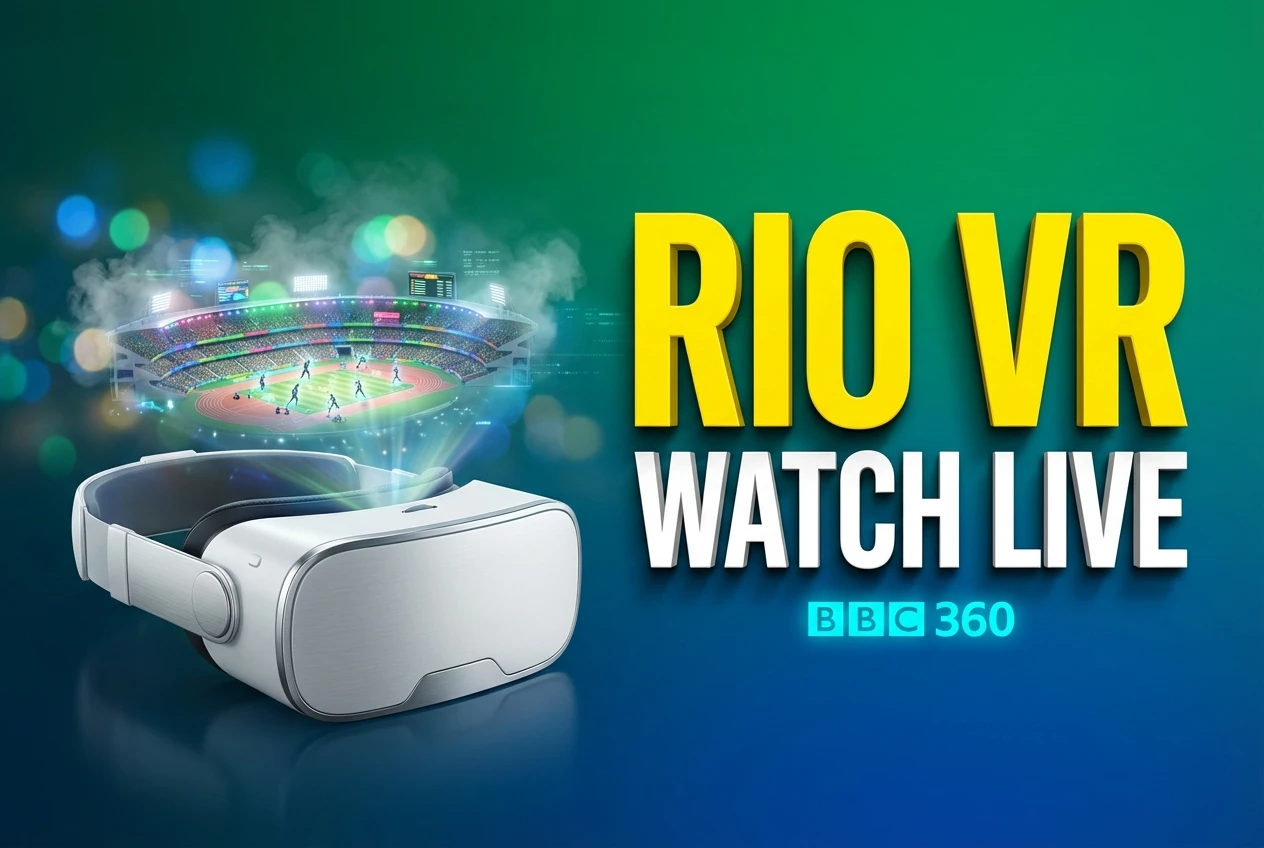
85 Hours of Footage and a One-Day Viewing Delay
If you plan to strap on a headset in the United States, you will have access to 85 hours of virtual reality coverage. NBC has curated a specific schedule that focuses on the most visually compelling sports. Rather than attempting to broadcast every single preliminary heat in 360 degrees, the network has chosen events where the immersive perspective adds actual value to the viewer.
The virtual reality event schedule includes:
- The complete opening and closing ceremonies
- Men’s basketball matches including the finals
- Various track and field competitions
- Beach volleyball directly from the Copacabana stadium
- Diving, fencing, and gymnastics routines
There is one significant catch to this futuristic viewing experience. The vast majority of the VR coverage is provided on a one-day delay. Because stitching together high-resolution 360-degree video takes considerable processing power, networks need time to format the footage before pushing it to the apps. If you want to know who wins gold the second it happens, you still need to watch the traditional television broadcast.
Additionally, NBC is sticking to its established business model for digital content. To access the American VR streams, users must authenticate their cable or satellite subscription through the NBC Sports app. The virtual stadium doors are only open to those already paying for traditional television packages.
What You Need to Enter the Virtual Stadium
The hardware requirements for watching the games depend entirely on where you live. In the United States, the NBC coverage is entirely exclusive to users of Samsung Gear VR headsets. The electronics giant partnered directly with NBC to sponsor the broadcasts, which means owners of other premium headsets like the Oculus Rift or HTC Vive are left out of the official American app.
You cannot simply buy the headset on its own. The Gear VR requires specific compatible Samsung Galaxy smartphones to act as the screen and processing engine. You must snap a Galaxy S7, S7 edge, S6, S6 edge, S6 edge+, or Note 5 into the front of the goggles to boot up the Oculus-powered software.
| Region / Broadcaster | Required Hardware | Software / App |
|---|---|---|
| United States (NBC) | Samsung Gear VR only | NBC Sports App (Requires cable login) |
| United Kingdom (BBC) | Gear VR or Google Cardboard | BBC Sport 360 VR App |
| International Partners | Varies by local network | Provided by Olympic Broadcasting Services |
The audience for this format is growing faster than many anticipated. Earlier this year in May, Oculus announced that more than one million people had used a Gear VR in a single month. This installed base gives broadcasters a genuine audience to test their new filming techniques on, rather than just broadcasting to a handful of tech reviewers.
The BBC is taking a more open approach. Their app works with Google Cardboard, an affordable folding viewer that turns almost any modern Android or iOS phone into a basic headset. This lowers the barrier to entry significantly for UK viewers who just want to test the waters of immersive sports.
A Glimpse Into the Future of Live Sports Broadcasting
The technology has already been quietly tested on smaller stages. Earlier this year, BT Sport used similar 360-degree cameras to film an NBA Global Games match between the Orlando Magic and Toronto Raptors at the O2 Arena in the UK. The success of that experiment helped pave the way for this much larger Olympic rollout.
Industry analysts are watching these broadcasts closely. A recent report from Goldman Sachs outlined the projected market size for VR and AR, suggesting the industry could hit $80 billion by 2025. For that to happen, the technology must transition from a niche enthusiast product into a mainstream consumer device.
Sports programming is widely considered the crucial bridge to that mainstream acceptance. Key reasons include:
- Fans are already accustomed to paying premium prices for good seats.
- The fixed positions of sports venues make camera placement easier than in narrative films.
- Live events naturally generate immediate urgency and fear of missing out.
- Broadcasters can sell virtual advertising space inside the stadium view.
It remains to be seen how many users will actually sit through a two-hour basketball game with a heavy phone strapped to their face. The physical comfort of current headset designs is still a limiting factor. But the simple fact that you can watch the opening ceremonies from the middle of the Maracanã Stadium without a plane ticket is a technical marvel.
We are finally moving past the hype phase and into practical applications. As the technology continues to mature, the #Rio2016 games will likely be remembered as the moment #VirtualReality finally earned its place in the modern living room.