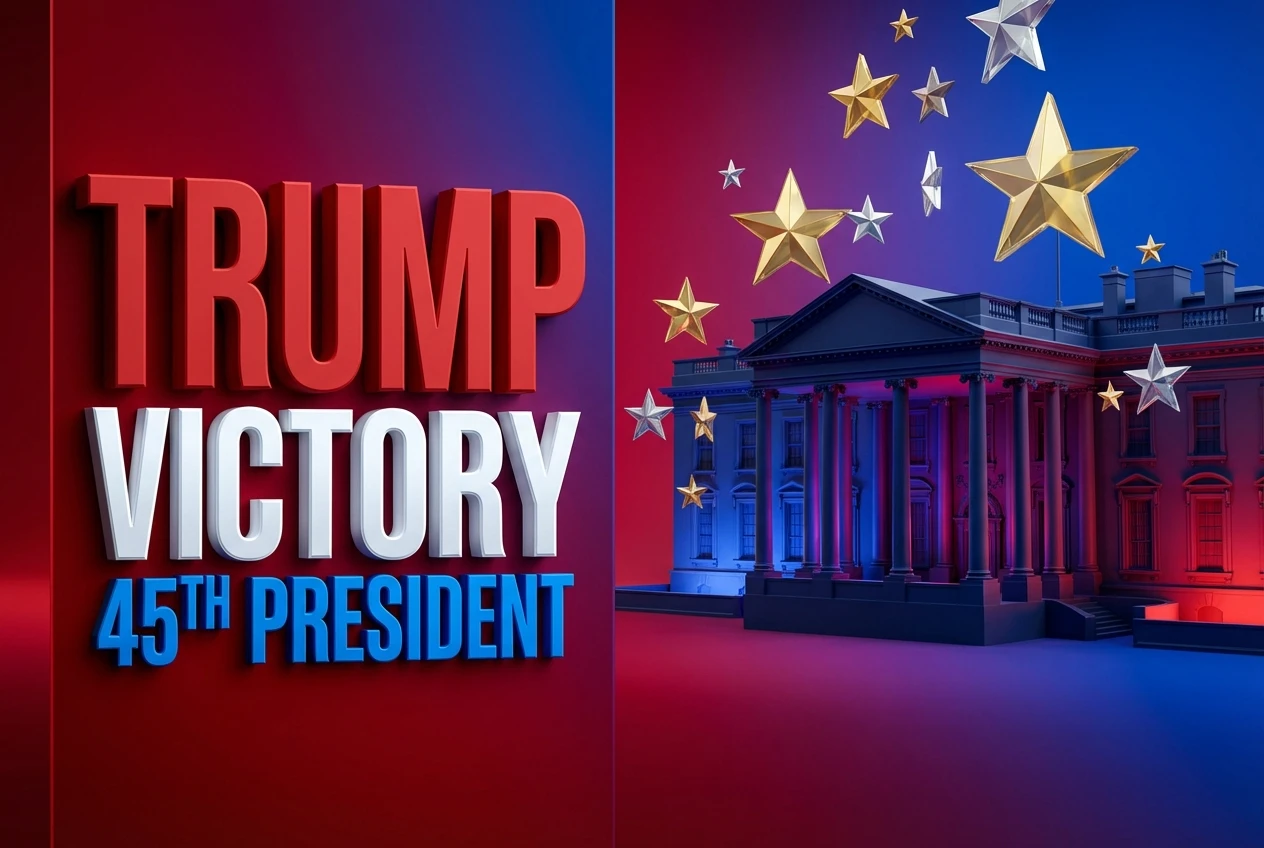
Early Wednesday morning, Donald Trump stepped onto the stage to claim the title of 45th President of the United States. Following a brutal campaign season that defied almost all conventional expectations, the Republican nominee secured the White House alongside his party retaining control of both the Senate and the House of Representatives.
The Late Night Phone Call That Ended the Race
Just around 2:30 AM Eastern Time, Hillary Clinton picked up the phone to concede the election.
That private phone call effectively ended the 58th quadrennial presidential election, allowing the Republican ticket to finally celebrate. Twenty minutes later, the President-elect delivered his victory speech at the Hilton Midtown in Manhattan. Surrounded by family members including Melania and Barron Trump, he addressed a room packed with supporters who had stayed up through the tense overnight hours.
Vice President-elect Mike Pence introduced him to the crowd, capturing the mood of the room. “This is a historic night,” Pence told the audience. “The American people have spoken and the American people have elected their new champion.”
When Trump took the microphone, his tone shifted noticeably from the aggressive rhetoric of the campaign trail. He immediately thanked Clinton for her dedicated service and acknowledged the hard-fought battle they had just concluded. The central theme of his address focused heavily on bringing a fractured country back together.
“I pledge to every citizen of our land that I will be President for all Americans, and this is so important to me.” — Donald Trump, President-elect of the United States
Later that morning at the New Yorker Hotel, Clinton delivered her own concession speech to her supporters. She urged her voters to accept the results and look toward the future. She noted that her opponent was going to be the president, adding that the country owed him an open mind and the chance to lead.
Speaking Directly to the Forgotten American
The core of the winning campaign relied on a very specific demographic of voters who felt left behind by modern economic shifts. Trump ran heavily on the “Make America Great Again” slogan, prioritizing strict immigration policies and renegotiated trade deals. This message resonated loudly in industrial states.
In his speech, he promised that these citizens would no longer be ignored by Washington. He outlined an urgent task of rebuilding the nation and reviving the American dream for working-class families. The crowd responded with loud cheers and recurring chants of “USA, USA” as he detailed his domestic vision.
The President-elect laid out several immediate priorities for his upcoming administration:
- Rebuilding the country’s aging infrastructure
- Creating a project of national economic growth
- Doubling current growth rates through new plans
- Building the strongest economy in the world
- Ensuring the forgotten men and women are prioritized
Demographic data from the Pew Research Center highlights exactly how this coalition came together. Non-college white voters made up 63 percent of the winning coalition. By comparison, 43 percent of Clinton’s supporters were college graduates. This distinct educational divide reshaped the electoral map entirely.
The most shocking result of the night was how the Republican ticket won the critical Blue Wall states that had leaned Democratic for decades. Michigan, Pennsylvania, and Wisconsin fell to the Republicans by a remarkably thin margin of fewer than 80,000 votes combined. FiveThirtyEight Editor-in-Chief Nate Silver noted in his post-election analysis regarding his victory that the new president’s knowledge of the nooks and crannies of political geography made him seem like a local to these essential voters.
The Billion-Dollar Campaign and the Polling Miss
Almost every major media outlet and tracking firm had projected a completely different outcome for Tuesday night. Most models, including the New York Times Upshot, had given Clinton an 80 to 90 percent chance of winning. Because pre-election polling heavily favored a Democratic win, the actual results sent shockwaves through the political establishment.
The race was incredibly expensive, reflecting the high stakes for both major parties. According to the Center for Public Integrity, candidate committees and supporting groups spent nearly $2.17 billion during the entire race. Campaign finance reports from the FEC show that the Republican nominee contributed $66.1 million of his personal funds to help finance his successful run.
| Metric | 2016 Election Data |
|---|---|
| Total Campaign Spending | $2.17 billion estimated |
| Eligible Voter Turnout | 54.8 percent |
| Popular Vote Difference | 2.8 million (Clinton lead) |
| Final Electoral Votes | 304 to 227 |
The final official 2016 presidential election results exposed a deep split between the Electoral College and the national popular vote. While the Electoral College tally stood at 304 to 227 in favor of the Republicans, Clinton actually won the popular vote by approximately 2.8 million ballots. Turnout for the election hovered around 54.8 percent of the voting-eligible population, according to the National Conference of State Legislatures.
Setting the Stage for a New Global Stance
Beyond domestic policy, the victory speech offered a brief but clear glimpse into how the new administration plans to handle international relations. The incoming president stated clearly that the United States would no longer settle for anything less than the absolute best.
He sent a direct message to the world community regarding his foreign policy approach. He emphasized that while American interests would always be placed on top, his administration would deal fairly with everyone in the global community. He expressed a willingness to get along with all other nations that are willing to get along with the United States.
The transition team, led by figures like Reince Priebus and Mike Pence, now has roughly ten weeks to assemble a cabinet and staff the executive branch. They face the unique challenge of preparing a leader who is the first person ever elected to the presidency without any prior military or public service experience.
The next major constitutional step involves the Electoral College electors formally casting their ballots. After those votes are certified by Congress, the nation will prepare for the officially scheduled inauguration on January 20, 2017, when the transfer of power will be complete.
The coming weeks will reveal exactly how the campaign’s bold promises translate into formal policy drafts. As the dust settles on this historic #Election2016, the transition team now faces the serious reality of preparing the #PresidentElect for the immense responsibilities of the Oval Office.