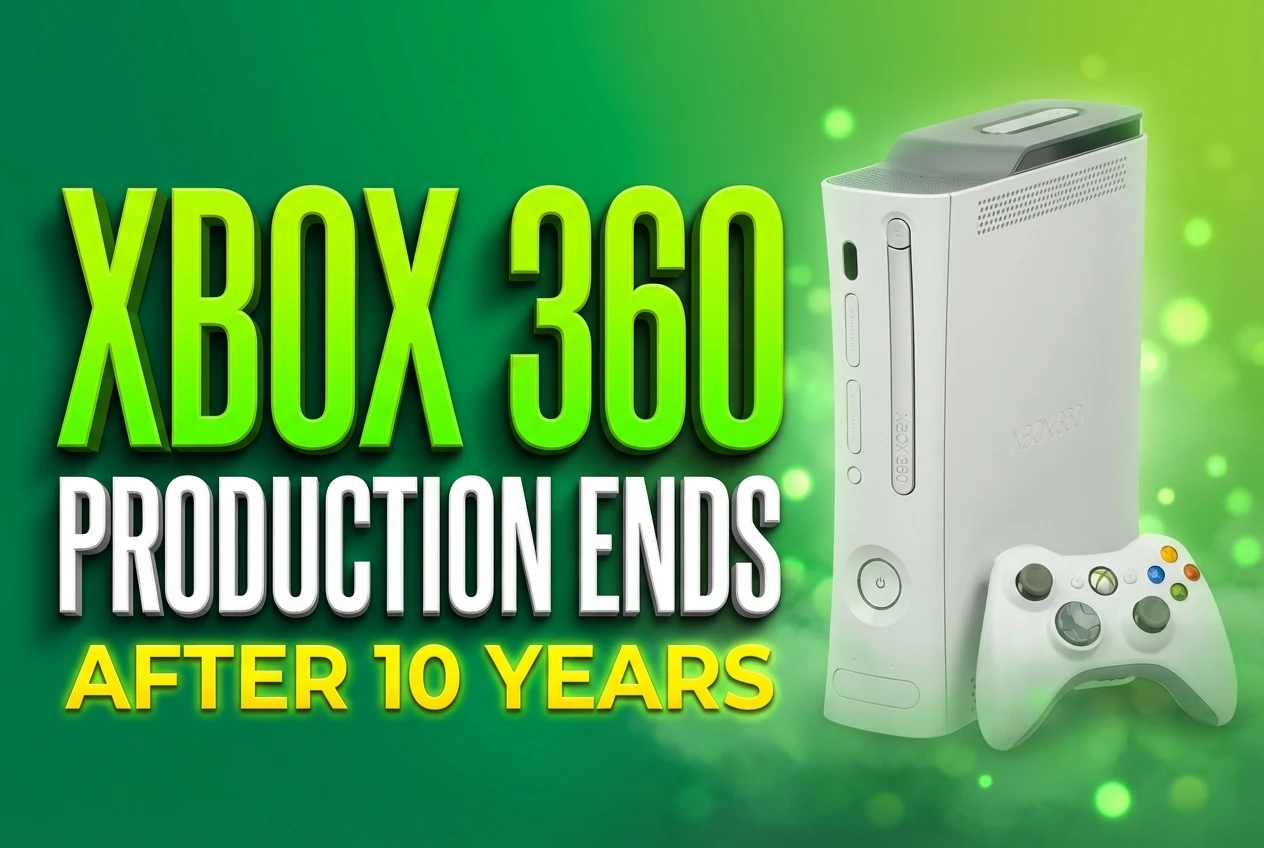
If you still have a pristine white controller sitting on your entertainment stand, it is now a piece of gaming history. On April 20, Head of Xbox Phil Spencer confirmed that Microsoft is permanently stopping production of all new Xbox 360 hardware. The factory lines are shutting down exactly ten and a half years after the system kicked off the seventh generation of living room entertainment.
A Decade of Digital Achievements
The numbers behind this console read like a statistical anomaly. Since the hardware launched in November 2005, players have logged an astonishing 78 billion gaming hours across the platform globally. That kind of engagement fundamentally changed how developers approached game design and post-launch content.
Getting a full year head start against the PlayStation 3 and Nintendo Wii gave Microsoft a critical advantage. This early push allowed them to lead the United States console market for 22 consecutive months, establishing a dominant foothold in North America. The introduction of achievements completely rewired player psychology, turning simple task completion into a competitive social currency among friends.
According to data released by the company this week, the community has accumulated nearly 486 billion Gamerscore on 27 billion achievements over the product’s lifetime. These are figures nobody could have predicted when the heavy white boxes first hit store shelves with wired headsets and detachable hard drives.
“Xbox 360 means a lot to everyone in Microsoft. And while we’ve had an amazing run, the realities of manufacturing a product over a decade old are starting to creep up on us.” — Phil Spencer, Head of Xbox
The company achieved a series of major milestones during the lifecycle of the system that set new industry standards:
- Pioneering a unified online social network with standardized friend lists
- Introducing regular dashboard updates that fundamentally changed the user interface
- Normalizing downloadable expansions and digital storefronts for independent games
- Creating a robust party chat system that worked across different titles
Surviving a Billion Dollar Hardware Crisis
The journey to ten years was almost cut drastically short.
In 2007, Microsoft faced a hardware catastrophe that threatened to sink the brand entirely. Early adopters began experiencing a fatal system error indicated by three flashing red lights on the power button. This hardware failure, driven by heat-related stress on internal solder joints, became infamous worldwide as the Red Ring of Death.
Industry surveys at the time indicated a reported failure rate of 23.7 percent during the peak of the crisis. To save their relationship with consumers, executives made a deeply expensive choice. The company reported a financial charge of up to $1.15 billion against their earnings in the fourth quarter of 2007 to cover a blanket three-year warranty extension.
That costly pivot allowed the team to refine the internal architecture over several iterations. Microsoft eventually released three major hardware revisions to solve the thermal issues and modernize the design.
| Hardware Revision | Release Year | Key Changes |
|---|---|---|
| Original Pro / Elite | 2005 – 2007 | Detachable top-mounted hard drives and memory unit slots |
| Xbox 360 S (Slim) | 2010 | Built-in Wi-Fi, dedicated Kinect port, and quieter cooling fans |
| Xbox 360 E | 2013 | Redesigned aesthetics to match the upcoming Xbox One aesthetic |
Backward Compatibility Keeps the Library Alive
You might be looking at a shelf full of plastic game cases and wondering what happens next. Fortunately, the end of hardware production does not mean the end of your software library. Microsoft will continue to sell remaining hardware stock through retail shops and online stores until warehouses are empty.
More importantly, the company already solved the transition problem last year. At the 2015 E3 event, Phil Spencer announced that the software team had engineered a way for legacy titles to be playable natively on your Xbox One. This backward compatibility program ensures that the time and money you invested into the previous generation carries forward to the new hardware.
The network infrastructure is not going anywhere either. Players can still connect to Xbox Live to access multiplayer servers, manage their friend lists, and download their digital purchases. The monthly subscriber benefits, including subscribers of Games with Gold and routine digital discounts, will continue operating as normal for the foreseeable future.
More Than Just a Gaming Machine
Halfway through its life, the console pivoted aggressively toward becoming an all-in-one entertainment hub. This shift brought the integration of media apps like Netflix directly into the living room, changing how millions of people consumed television. According to Microsoft’s retrospective data, users racked up over 25 billion hours spent in apps rather than playing traditional games.
The 2010 introduction of the Kinect motion-sensing peripheral further extended the system’s lifespan. By removing the controller entirely, the platform attracted a casual audience that had previously flocked to the Nintendo Wii. It was a strategic move that kept sales momentum strong even as the hardware began to age against rapidly advancing PC technology.
Here is a helpful visual timeline showing the evolution of the dashboard interface over the past decade:
The shift to the eighth generation is now moving at full speed. Recent aligned sales reports from 2016 show that the newer consoles have already outpaced the previous generation by 21 million units in their first thirty months. The free version of the Windows 10 operating system was built specifically with Xbox One integration in mind, pushing the ecosystem forward and leaving older hardware behind.
It is difficult to overstate how much this specific piece of plastic and silicon shifted the entertainment industry. For an entire decade, the `#Xbox360` defined how friends communicated across time zones, securing its permanent place in `#GamingHistory` as a console that refused to be ignored.