Late Friday night, a seemingly simple celebratory moment turned into a viral controversy. As President Donald Trump sliced into a towering cake at the Salute to Our Armed Services Ball, a famous celebrity pastry chef noticed something very familiar on his television screen. The design was nearly identical to the masterpiece he created for Barack Obama four years earlier. Within hours, a side-by-side photo set the internet on fire, forcing the bakery behind the new cake to explain exactly what happened behind the scenes.
The Late Night Photo That Started a Frenzy
Duff Goldman was watching the inaugural festivities on January 20, 2017, when a particular dessert caught his eye. The famous television baker and owner of Charm City Cakes immediately recognized the intricate details sitting on the stage. Back in 2013, he had spent days designing and building a highly specific cake for President Barack Obama’s second inauguration Commander-in-Chief’s Ball. Seeing the exact same design pop up at a different presidential event four years later came as a complete surprise.
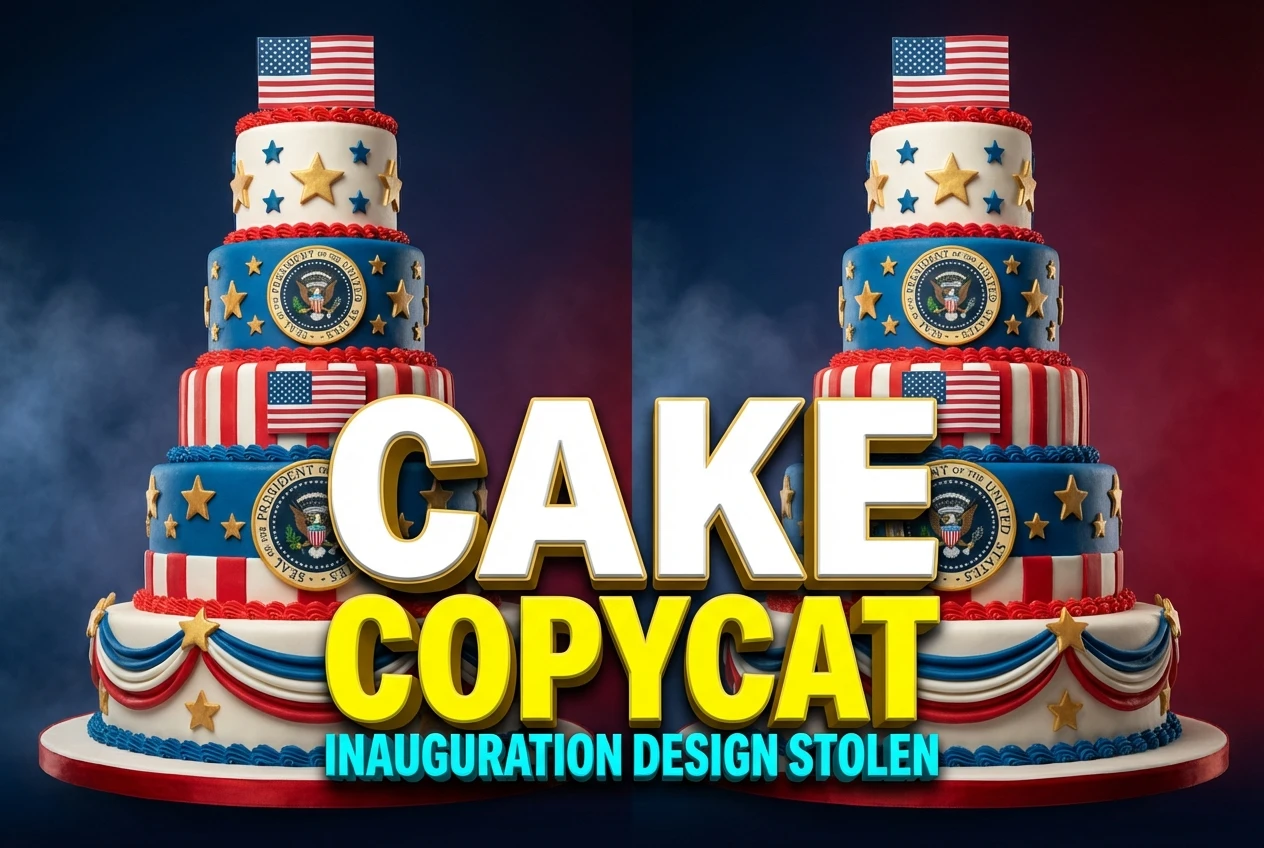
Instead of staying quiet, Goldman took out his phone. He posted a side-by-side photo to Twitter comparing the two desserts, pointing out that he definitely did not make the new one. The image quickly went viral, showing a nine-tier creation with red and white stripes resting below blue frosting adorned with silver stars and the presidential seal. The visual evidence was undeniable, and the internet immediately began demanding answers about who copied the original work without giving proper credit.
The cake on the left is the one I made for President Obama’s inauguration 4 years ago. The one on the right is Trump’s. I didn’t make it.
The controversy highlighted the intense scrutiny placed on every single detail of a presidential transition. In previous eras, a replicated cake design might have gone completely unnoticed by the general public. But with modern social platforms, the original creator was able to flag the identical design in real time. This turned a standard gala photo opportunity into a headline news story before the weekend was even over.
A Direct Order From the Inaugural Committee
The mystery of the copied dessert was solved less than a day later. Tiffany MacIsaac stepped forward to claim responsibility for the 2017 creation. As the owner of Buttercream Bakeshop, a well known bakery based in Washington, D.C., she found herself at the center of a national media storm. She quickly clarified that stealing another artist’s design was never her intention, and the situation was actually the result of strict client instructions.
In an interview with The Washington Post, MacIsaac explained that her bakery was explicitly asked by the inauguration committee to recreate the 2013 pastry down to the smallest detail. She initially tried to steer the planners toward something original. Her team offered to use the old design as inspiration while creating a fresh concept that would be unique to the new administration, but the event coordinators refused to budge on their vision. They wanted a flawless replica, and they were not interested in any creative alterations.
The inaugural planners knew exactly what they wanted for the Salute to Our Armed Services Ball. They brought in a photograph of Goldman’s previous work and presented it as a mandatory requirement for the bakery to follow.
Here are the specific constraints the local bakery had to work with to fulfill the order:
- Planners demanded the exact color scheme from the reference photo
- The overall structure had to feature the same nine stacked tiers
- The bakery was forbidden from making creative changes to the layout
- The physical structure was largely made of styrofoam for stability
- Only a small slice at the bottom consisted of actual cake for cutting
How a Copied Masterpiece Became a Charitable Donation
Faced with a demanding client and a high profile event, Buttercream Bakeshop decided to fulfill the order. Replicating another artist’s work is generally frowned upon in creative industries, but the bakery acknowledged that recreating a masterpiece is sometimes just part of running a commercial business. They leaned into the situation, admitting the truth publicly while finding a way to make a positive impact with the unexpected attention they were receiving.
The bakery released a formal statement on their official Instagram account to address the growing controversy. They praised Goldman’s original 2013 design and confirmed that they were simply following orders from the committee. To turn the awkward situation into something meaningful, MacIsaac announced that all of the profits from this cake would not be staying in the bakery’s cash register. Instead, the money would be redirected to a cause they cared about.
The company pledged that 100 percent of the money earned from the order would be donated to the Human Rights Campaign. This particular charity focuses on LGBTQ equality, making the donation a subtle but powerful statement during a polarized political weekend. The move was widely praised online, helping the small business navigate a public relations hurdle that could have otherwise damaged their reputation in the vibrant Washington culinary scene.
The Power of Digital Brand Accountability
According to a Pew Research Center report on the 2017 inauguration, public reactions to these kinds of minor incidents happen instantly on modern social platforms. The original baker, the new bakery, and the general public were all able to communicate and resolve the mystery within a 24-hour window. This kind of rapid fact checking simply did not exist during past presidential transitions, where a visual similarity would likely be forgotten in the archives.
| Event Detail | 2013 Inauguration | 2017 Inauguration |
|---|---|---|
| Event Name | Commander-in-Chief’s Ball | Salute to Our Armed Services Ball |
| Bakery Used | Charm City Cakes | Buttercream Bakeshop |
| Design Origin | Original creation by Duff Goldman | Exact replica ordered by committee |
| Profit Status | Standard business revenue | Donated to charity |
The speed at which this story unfolded shows how difficult it is to reuse ideas when millions of people are watching live. Every detail of a televised event is documented, archived, and ready to be cross referenced by viewers at home. For event planners coordinating on the national stage, this incident proved that cutting corners on creative design will almost certainly be noticed.
The saga of the copied pastry remains one of the more unusual footnotes of the 2017 transition of power. It highlights the immense pressure small businesses face when dealing with powerful clients, and it shows how a clever charitable response can defuse a tense public relations problem. As high profile events continue to be broadcast to millions, planners will likely think twice before recycling old ideas, knowing that the internet never forgets a famous #InaugurationCake when it appears on the global #PoliticalStage.